


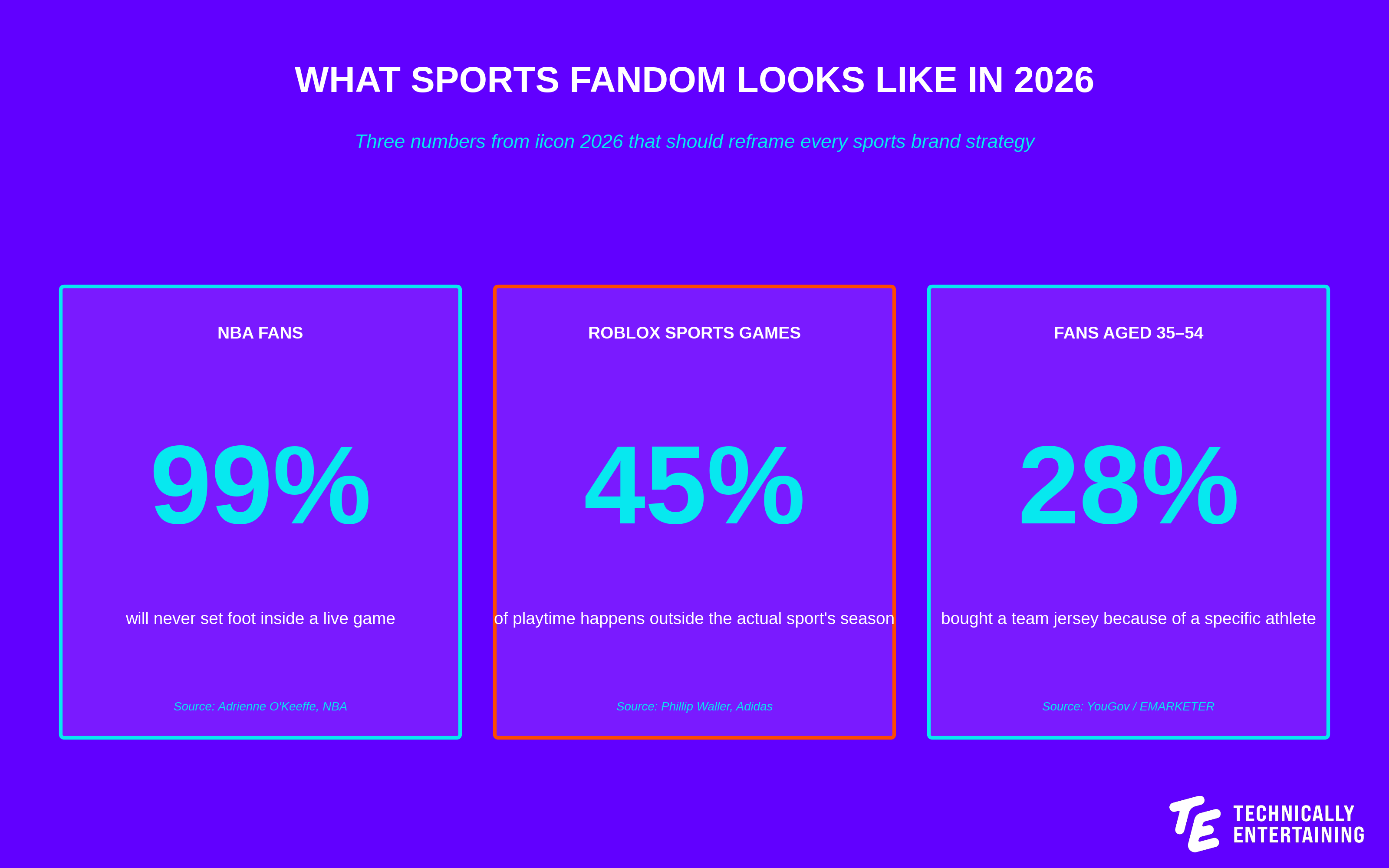
In a session at iicon 2026, Adrienne O’Keeffe, SVP of Global Partnerships and Media at the NBA, dropped a number that reframed the entire conversation about sports fandom for me. 99% of NBA fans will never set foot inside a live game.
Sit with that for a second. The arena experience that anchors the cultural mythology of basketball reaches one fan in a hundred. The other 99 live with their teams somewhere else. Increasingly, that somewhere else is a video game.
I left the conference convinced that the conventional sports marketing playbook is being quietly retired. The new playbook treats games as the primary venue of fandom, treats athletes as full-time content partners, and treats commerce as a closed-loop function of the experience itself. Two iicon panels and a fresh report from EMARKETER, “From fan to cart: Why sports fandom has become a direct path to purchase,” put the architecture in plain view.
Sports fandom now lives where the brand and the league activate together, and games sit at the center of that activation. The brands building for this reality are turning fan emotion into measurable commerce, with new tools to close the loop from identification to purchase.
The NBA, 2K, and the Video Game as the League’s Living Room
The NBA and Take-Two’s 2K shared the iicon stage to talk about a partnership that has quietly become one of the most important brand-distribution channels in professional sports.
Crystal MacKenzie, VP of Global Marketing at NBA 2K, framed the strategic stakes plainly. For a huge share of the global fanbase, NBA 2K is the first touchpoint with the league. A teenager in Manila or São Paulo discovers Anthony Edwards through the controller, then graduates to highlight reels, jersey purchases, and live streams. The game is the gateway, and the gateway is wide.
That makes 2K’s authenticity obsession a strategic asset. The game strives to be the most accurate representation of the actual league, allowing fans to experience and identify with their teams and individual athletes. Player likenesses, signature moves, arena audio, broadcast presentation, all of it has to feel like the real thing. Authenticity earns the right to be the league’s facsimile.
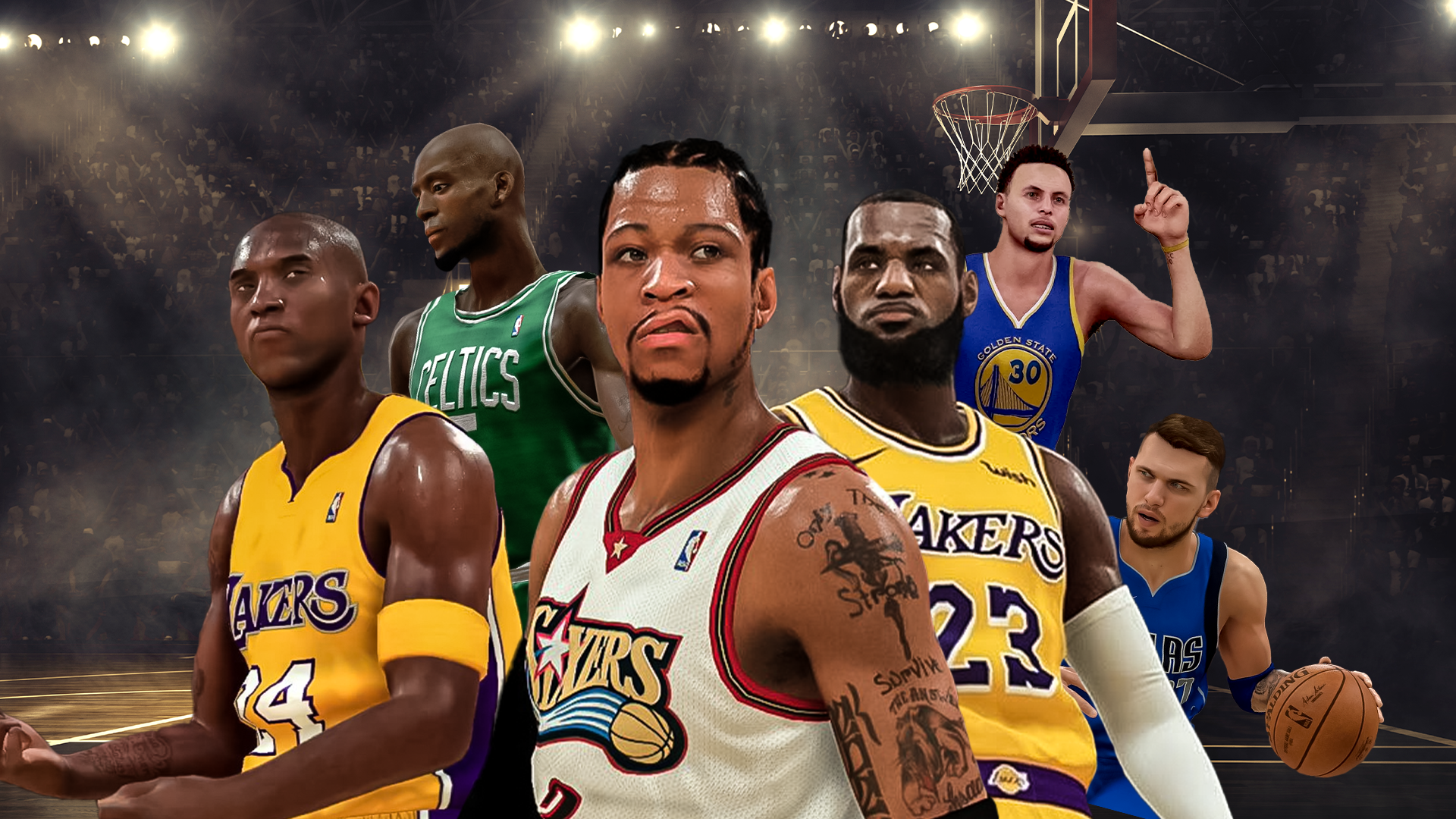
O’Keeffe pointed to live service as the multiplier. In-game events, merchandise drops, and seasonal moments timed to the actual NBA calendar give the league an always-on amplification channel. When a marquee trade happens, 2K reflects it. When the All-Star Game arrives, the game runs themed events. The boundary between watching the league and playing the league is dissolving in real time.
The implication for brands is direct. If 99% of fans never see a live game, your activation strategy needs to reach them where they actually are. A 30-second TV spot during the playoffs is one channel. The video game where the same fan spends hundreds of hours a year is another, and it carries a fundamentally different relationship.
Adidas + Roblox: The Authenticity Test in Action
The Roblox-Adidas panel, featuring Phillip Waller, SVP of Brand Development and GM of Gaming, and Thomas Wehner, Head of Gaming, at Adidas, was the most operationally useful conversation I attended at iicon. It revealed how a global brand actually shows up in a gaming environment without alienating the audience.
Waller opened with two numbers that should be on every sports marketer’s wall. Kids spend an average of 2.5 hours per day on Roblox. And 45% of time spent on sports games inside Roblox happens outside the official season of the actual sport. Sports fandom in this environment is no longer seasonal, and it’s no longer bounded by the official calendar at all.


The structural choice Adidas made is worth studying. The company’s gaming division sits inside business development rather than marketing. Waller explained the reasoning at iicon: anchoring in business development gives the team flexibility on creative and production decisions, keeps them close to the consumer, and lets them experiment without the campaign timelines and KPIs that constrain a typical marketing function. That’s a structural insight most brands haven’t internalized.
His operating principle was direct. “If we can’t add value, we’re not doing it.” Adidas has declined a long list of publisher offers because the fit wasn’t right. The discipline of saying no is the discipline that earns credibility with players.
In the early phase, Adidas deliberately stayed away from heavy tracking. The goal was learning rather than optimizing. The team needed to understand the cultural grammar of the platform before measuring against it. As the work matured, the critical metric for Roblox activations became users’ willingness to spend in-game Robux currency on Adidas items. A free skin offers no signal of value. A paid skin proves the brand earned the consumer’s scarcest resource: their game economy.
Waller’s two pieces of advice for any brand thinking about gaming activation are worth remembering. First, connect your brand DNA to the DNA of the game. The activation has to feel native to the platform, the players, and the moment. Second, avoid building your own worlds from scratch unless you’re already in the world-building business. Learn first with smaller, lower-stakes projects, then scale what proves out and identify your best long-term fit inside gaming.
The Macro Picture: Athletes Have Become the Channel
The iicon insights snap into focus once you overlay them on the EMARKETER data. The report’s core finding is that individual athletes drive purchases that team loyalty alone cannot explain.
A YouGov survey of more than 900 US sports fans found that 25% have bought a team jersey primarily because of a specific athlete. Among 35-to-54-year-olds, the demographic with the most disposable income, that figure climbs to 28%. 10% of fans have bought merchandise for a team they don’t support because of a single player. 8% have purchased products specifically because an athlete recommended them.
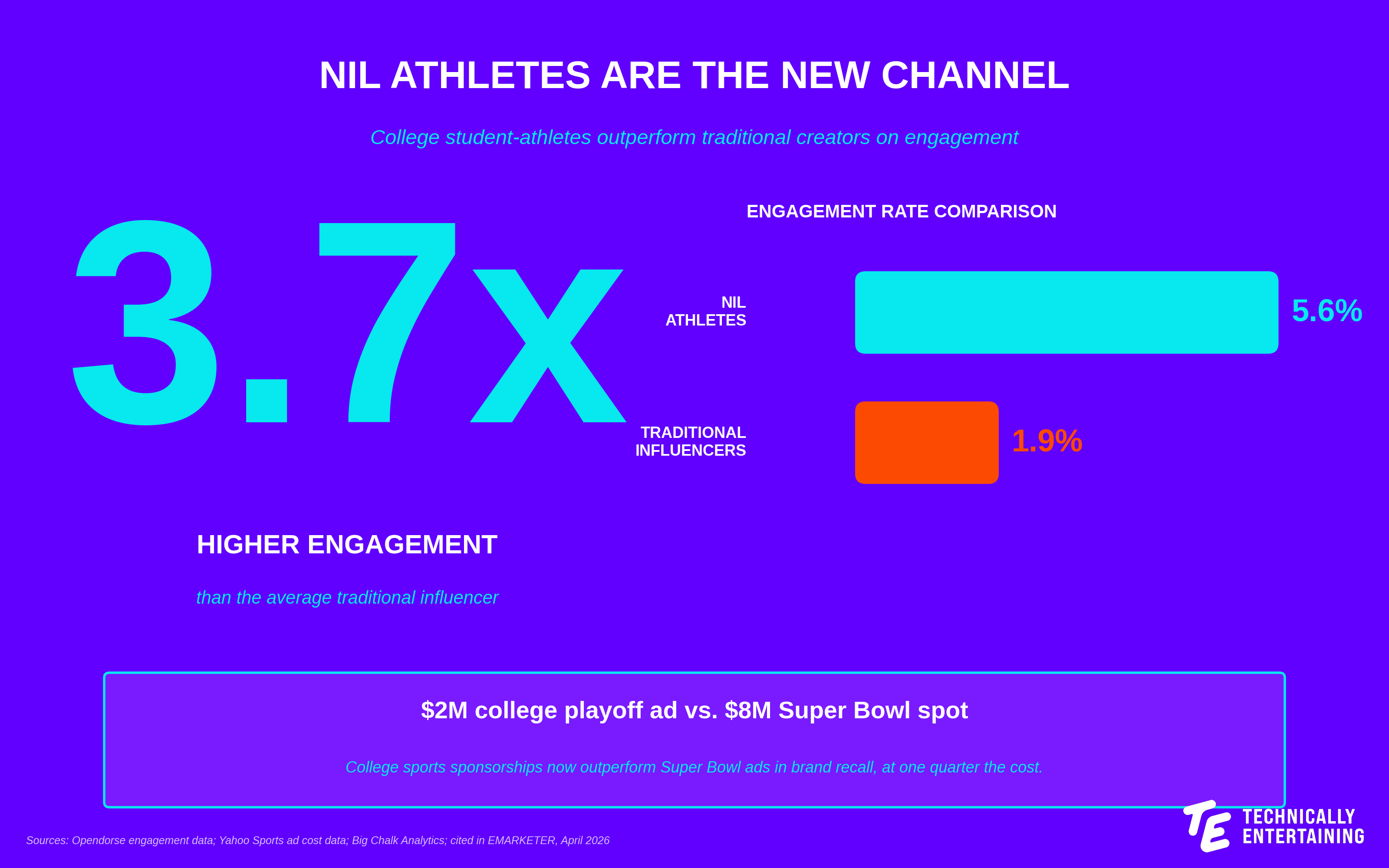
Social media has accelerated the shift. 46% of US sports fans follow sports influencers, and the number jumps to 57% among Gen Z, per IBM data cited by EMARKETER. The economics are hard to argue with: NIL student-athletes are posting a 5.6% engagement rate, 3.7 times higher than the 1.9% rate of traditional influencers, according to Opendorse. College sports sponsorships now outperform Super Bowl ads in brand recall at a fraction of the cost. A college playoff ad runs around $2 million versus $8 million for a 30-second Super Bowl spot, per Yahoo Sports.
The audience is enormous and concentrated. EMARKETER projects 164.7 million US fans will tune into live sports broadcasts in 2026, with the FIFA World Cup added to a packed Olympics year. The fan is reachable, the data is rich, and the conversion is closer than ever.
Commerce Media Is Closing the Loop
The most underappreciated shift in the EMARKETER report is the rise of sports-specific commerce media networks. Sports retailers are turning their first-party fan data into ad businesses, creating a category that didn’t exist five years ago.
Fanatics launched Fanatics Advertising in August 2025, with two ad networks running underneath it. The company posted $8.1 billion in revenue in 2024, up 15% year over year, with collectibles growing 40% to $1.6 billion, per Sportico. Jeremi Gorman, the former Netflix and Snap executive Fanatics hired as chief revenue officer, framed the value proposition pointedly: “Sponsoring a team is very expensive. Sponsoring a league is even more expensive. But that doesn’t mean brands don’t want to reach sports fans.” Non-endemic advertisers, brands that don’t sell on Fanatics, already account for the majority of the division’s revenue.
Dick’s Sporting Goods is running a similar play. The Dick’s Media network spans 850-plus stores across 47 states, with in-store media in its 100,000-square-foot House of Sport concept locations expanding to 50 by the end of 2026. The technology layer is what makes it more than a branding exercise. Radar and RFID track product pickups and visitor interactions, mapping them to sales. An Adidas campaign for the AE2 basketball shoe, endorsed by Anthony Edwards, used magnetic shelves to trigger nearby screens with Edwards content the moment a shopper picked up the shoe. 80% of Dick’s online orders fulfill from stores. 65% of 2024 sales came from omnichannel customers. The closed loop between in-store ad exposure and purchase is real.
The macro context: commerce media represented 19.5% of US digital ad spend in 2025 and is projected to reach 23.3% by 2029, per EMARKETER’s forecast. Sports-focused retailers with high-intent shoppers and rich first-party data are positioned to capture an outsized share.
What Brand and Strategy Leaders Should Do Now
Five operating principles emerge when you stack the iicon panels against the EMARKETER data.
Anchor your gaming work in business strategy rather than marketing campaigns. Adidas’s decision to house its gaming division inside business development is a structural choice with cultural consequences. It changes the time horizon, the metrics, and the cultural posture of the team. Brands that bolt gaming onto a marketing P&L will keep producing one-off activations that fail to compound.
Match brand DNA to game DNA before doing anything else. Waller’s principle protects the player relationship, and the player relationship is the entire asset. If your brand cannot bring genuine value into a world, stay out of that world.
Treat athletes as long-term content partners. The EMARKETER data is unambiguous: athletes drive purchase behavior more reliably than team loyalty does. NIL economics are turning college athletes into engagement engines that outperform traditional creators by 3.7x. The brands signing multi-year, content-led deals will compound advantage over time.
Use leagues and games as distribution. The NBA-2K relationship is a distribution channel for the league’s IP into 99% of its fanbase. A brand partnership inside that channel reaches a different fan, in a different mood, in a different transaction context than a courtside placement does.
Layer commerce media on top of every activation. Fanatics Advertising and the Dick’s Media network are turning fandom into measurable purchase intent. Non-endemic brands can now reach sports fans at the moment of purchase without paying for an official sponsorship. The cost of entry is lower, the measurement is sharper, and the loop closes inside the same shopping session.
The Real Stadium Has Already Moved
iicon 2026 made one thing inescapable. The center of gravity of sports fandom has shifted off the field and into the games, the feeds, the platforms, and the carts where fans actually live their relationship with the league.
99% of NBA fans never make it to a live game. 45% of Roblox sports gameplay happens off-season. Athletes drive purchase decisions that team loyalty alone cannot explain. Commerce media is on track to claim nearly a quarter of US digital ad spend.
The brands that build for this reality will own the next decade of sports fandom. Everyone else will keep paying more for less.
How is your brand thinking about the shift from stadium-and-broadcast to game-and-commerce? Where are you seeing the strongest signals of the new playbook? Let me know in the comments.
Technically Entertaining is your front-row seat to the convergence of gaming, technology, and entertainment, written for the brand and strategy leaders shaping what comes next. If you found this useful, subscribe to get every issue delivered to your inbox.