


"We're not just buying Paramount to run a traditional studio. We're building the next-generation entertainment company that will define how stories are told and consumed for the next decade."
David Ellison, CEO Paramount Skydance
Dear Readers,
When I ran into a senior executive at Paramount during Gamescom a few weeks ago, he said something to me that stopped me in my tracks:
“There’s a lot of excitement within Paramount about the merger with Skydance. We’re about to make a massive games related announcement, in the 9-figure investment range.”
What he was alluding to became clear just a few days later when Paramount Pictures announced its agreement with Microsoft over their collaboration for a movie based on one of the biggest gaming franchises of all time: Call of Duty.
The numbers behind the confidence of CEO David Ellison and the excitement of senior leadership across both Skydance and Paramount are staggering. According to Paramount Global's Q3 2024 earnings report, the combined entity will control $28.4 billion in annual revenue across streaming, theatrical, television, and licensing. More importantly, Skydance's merger documents reveal $8 billion in fresh capital backing from the Ellison family and Oracle co-founder Larry Ellison - war chest funding that could reshape Hollywood's competitive landscape.
But money alone won't solve Hollywood's structural problems. Here's why Paramount Skydance's strategy could succeed where others have failed, and what it means for the future of entertainment.
The Streaming Wars Reality Check
Paramount+ Needs More Than Hope
Paramount Global's streaming division reported 71 million global subscribers for Paramount+ as of Q3 2024, generating $1.86 billion in quarterly revenue. While that sounds impressive, it pales compared to Netflix's 247 million subscribers and $8.54 billion quarterly streaming revenue, according to Netflix's Q3 2024 earnings.
The brutal economics are clear: Paramount+ loses approximately $1.8 billion annually on streaming operations, while competitors like Disney+ have moved toward profitability. MoffettNathanson's Media Analysis 2024 shows that Paramount+ needs to reach 100 million subscribers to achieve breakeven - a 41% increase from current levels.
The Content Spend Problem
Paramount's 2024 content spending reached $6.2 billion across all platforms, but their content-to-subscriber ratio remains unfavorable. Netflix spends approximately $17 billion annually for 247 million subscribers ($69 per subscriber), while Paramount spends $6.2 billion for 71 million subscribers ($87 per subscriber).
Skydance's solution involves leveraging their production expertise and technology infrastructure. Skydance's production portfolio includes major franchises like Mission: Impossible, Star Trek, and Terminator, providing established IP that can drive subscriber acquisition more efficiently than developing original content from scratch. Additionally, Paramount just announced they’re creating a brand new Sports Entertainment Division to develop scripted and unscripted programming, as well as interactive games and experiences.
So more content, and content that keeps people coming back for more, is clearly a priority.
The Merge With Warner Bros Discovery
A possible solution to address both the required subscriber growth as well as strengthening the IP catalogue to reduce the need for immediate massive investment in new content could be the rumored acquisition of Warner Bros. Discovery. Now that Disney has fully acquired Hulu and will integrate all of Hulu’s content into the Disney+ app, shutting down the dedicated Hulu streaming app in the process, the combined offering sits firmly in third place with an estimated 183 million subscribers.
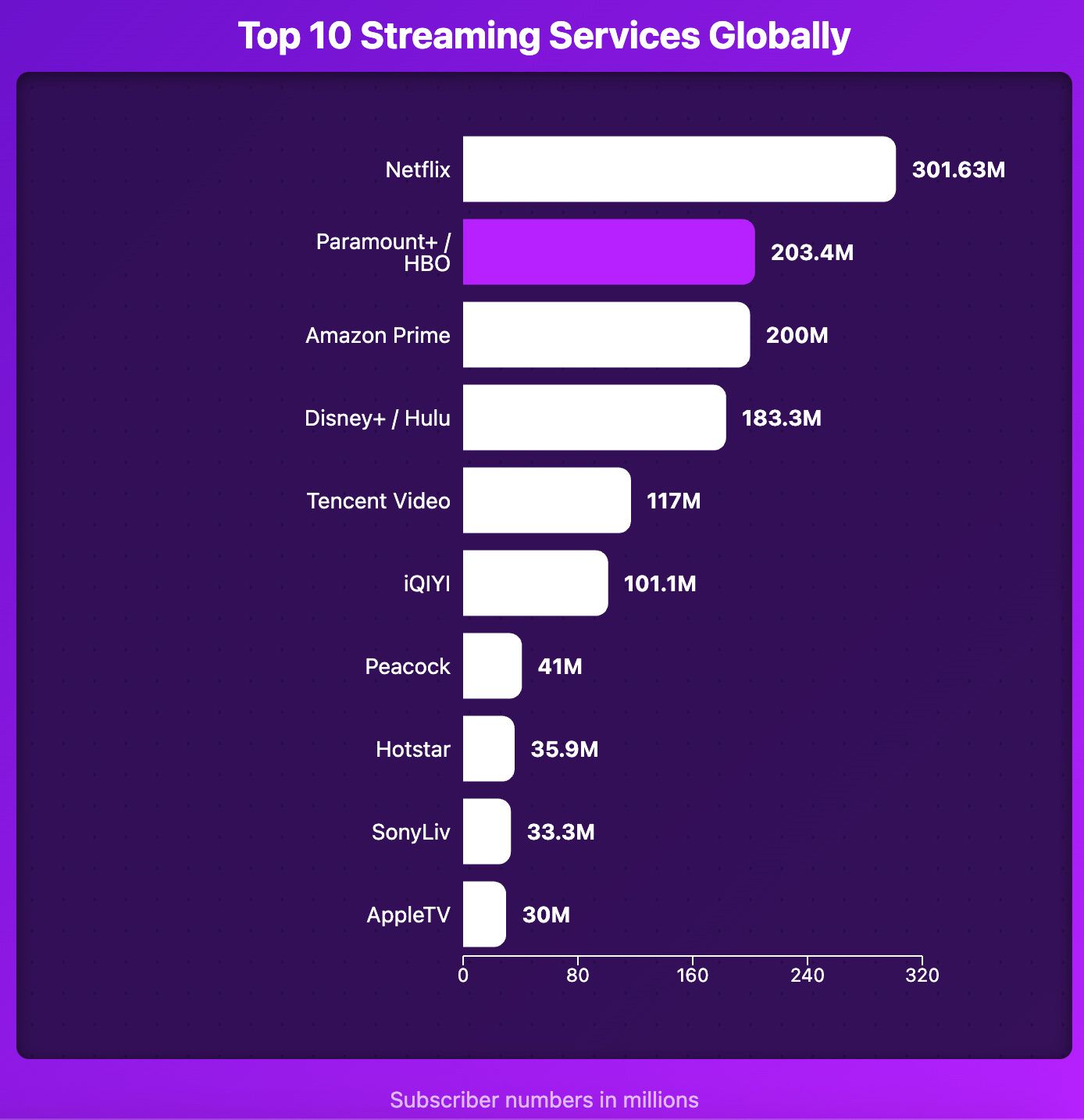
An acquisition of WBD would give Paramount Skydance ownership of what is arguably the most valuable brand in entertainment - HBO. Combining the subscriber bases of Paramount+ and HBO would catapult the new streaming giant into second or third place with roughly 203 million subscribers (pending some clean out due to overlapping subscribers between both distinct services).
All this sounds promising and enticing - but then there are the numbers to consider. Right now, WBD has an enterprise value of roughly $75 billion ($45 billion market cap, $30 in debt). Paramount Skydance’s enterprise value is at almost $30 billion. Under normal circumstances, a $30 billion company won’t be able to ingest a $75 billion company - but the circumstances here are anything but normal. Why? Larry Ellison, father of Paramount Skydance’s CEO David Ellison, and currently the richest/second richest man in the world (depending on the day), has seemingly decided to bankroll his son’s entertainment ambitions. He’ll have ways to come up with what analysts report would be $55 billion in cash required to convince WBD’s shareholders.
And there’s another potential complication looking: insiders report that Netflix is also contemplating a bid for the WBD assets.
Gaming: The Untapped Goldmine
The IP Arsenal Advantage
Paramount's entertainment library contains some of the most recognizable franchises in popular culture, yet their gaming revenue remains minimal. Paramount's licensing revenue shows only $180 million from interactive entertainment in 2024, compared to Disney's $1.1 billion gaming revenue reported in Disney's 2024 annual report.
The opportunity is massive. Newzoo's Global Games Market Report 20255 values the global gaming market at $189 billion, with transmedia franchises achieving 67% higher player lifetime value than original gaming IP. Bain & Company are even stating that the gaming market reached $219 billion in 2024 and is expected to grow 4% annually until 2028.
Skydance's Gaming Credentials
David Ellison's background includes successful gaming investments through Skydance Interactive, which developed acclaimed VR titles like "The Walking Dead: Saints & Sinners" and "Assassin's Creed Nexus." Skydance Interactive's financial performance, while not publicly detailed, has been profitable since 2022 according to industry reports.
If they were to acquire WBD, with it would come Warner Bros Games, which has developed successful titles like Hogwarts Legacy, Mortal Kombat, and a lot of LEGO games - it would level up their internal game development and distribution skills while significantly reducing the execution risks.
The strategic advantage comes from Oracle's technology infrastructure. Larry Ellison's database and cloud computing empire provides the technical backbone for massive multiplayer gaming experiences that traditional Hollywood studios lack. Oracle's gaming cloud services already power several major game developers, creating natural synergies for Paramount's IP gaming initiatives.
The Transmedia Strategy: More, Bigger, And Beyond Screens
Content across all screen sizes
Streaming is a clear priority for Paramount Skydance. But when you bring gaming into the fold, the potential for cross-pollination between the IP catalogue on the streaming and the gaming side is incredible. A movie adaptation based on the game Call of Duty is just the start. We should expect a lot more IP to be used to create new games, as well as gaming IP be turned into movies and TV shows. The synergies are profound: a recent study by Ampere Analysis shows that TV adaptations based on gaming IP drive growth in terms of active players of the corresponding game by almost 140%. A big part of making these movies successful is to make sure the actors have broad appeal while staying true to the core fanbase. Rumor has it Dwayne “The Rock” Johnson will be the main lead. I used a tool called Elaris to understand the appeal of The Rock with the Call of Duty fanbase and what male actors would be a better fit - the findings are in the video below. I hope the team at Paramount Skydance watches it.
Now add to that the rumored TikTok deal that would see a consortium of investors, including Oracle (there’s the Ellison family again), control an 80% stake in the social media platform. This would give Paramount Skydance another avenue to leverage all of its IP via short form video content - which is rapidly growing.
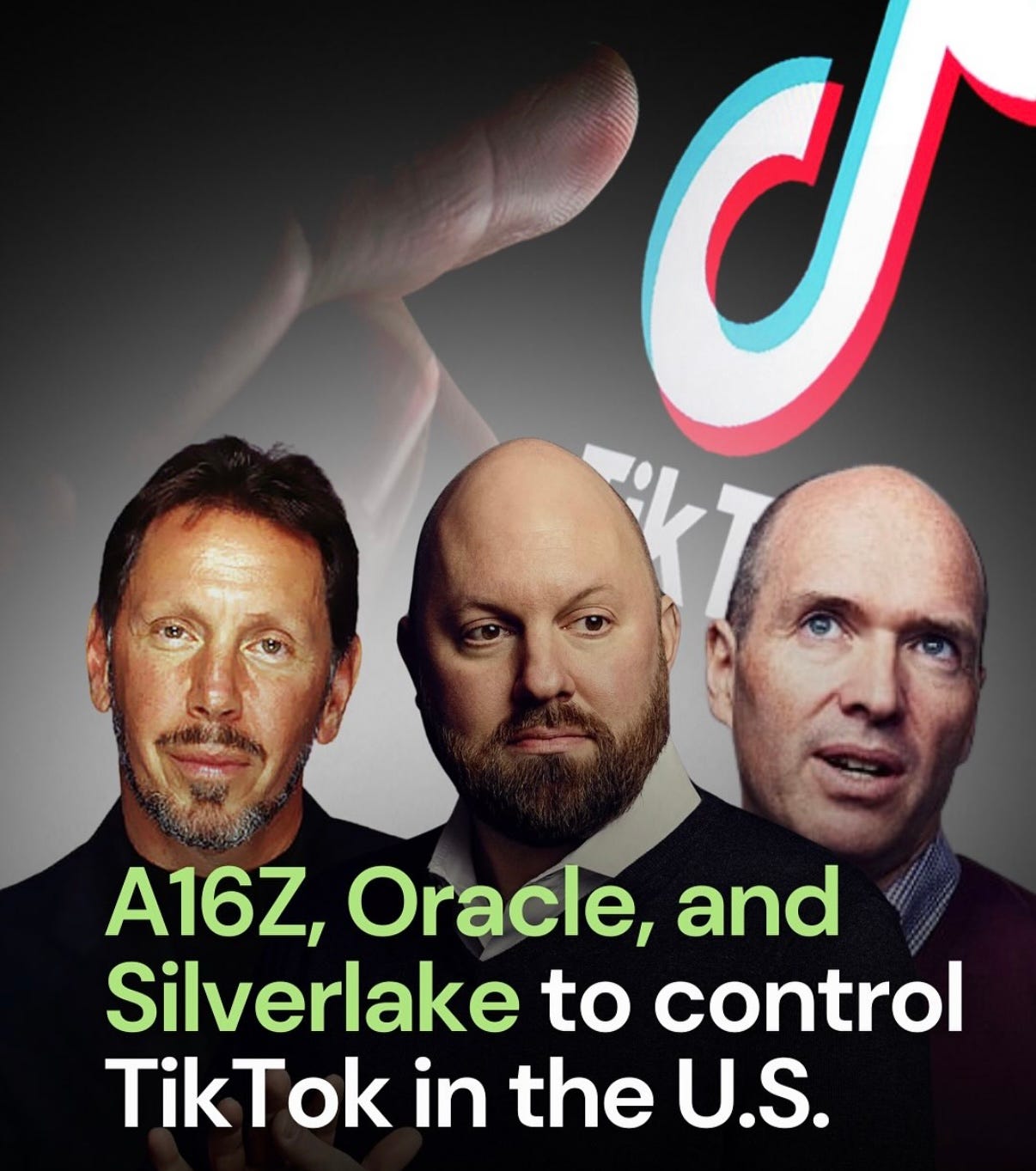
I don’t know about you, but there’s something unsettling about this specific set of people controlling arguably the most powerful social media algorithm of our time.
The Disney Model Applied
Disney's Parks, Experiences and Products division generated $32.5 billion in revenue in 2024, demonstrating how entertainment IP can create value across multiple consumer touchpoints. Paramount Skydance appears to be building toward a similar model.
Paramount's consumer products division currently generates approximately $400 million annually, but this represents massive untapped potential given their IP portfolio strength. Star Trek, Mission: Impossible, and Transformers alone represent billions in potential merchandise and experience revenue.
The Technology Integration Opportunity
Oracle's enterprise technology creates unique opportunities for direct consumer engagement. Oracle's customer experience cloud processes over 70 billion customer interactions annually, providing data analytics capabilities that traditional entertainment companies lack.
This infrastructure could enable Paramount Skydance to build direct relationships with consumers across all touchpoints - streaming, gaming, merchandise, and experiences - creating the type of integrated ecosystem that has made Disney and Netflix so successful.
Financial Firepower Meets Strategic Vision
The Ellison Family War Chest
Forbes' Real Time Billionaires List shows Larry Ellison's net worth at roughly $360 billion as of September 2025, making him the second-richest person globally. This provides Paramount Skydance with patient capital that public competitors cannot match.
The strategic advantage is timing. While competitors like Warner Bros Discovery struggle with debt according to WBD's Q3 2024 earnings, and Disney faces activist investor pressure for short-term returns, Paramount Skydance can make long-term investments in technology and content.
Oracle's Infrastructure Advantage
Oracle's annual revenue reached $53 billion in fiscal 2024, with cloud services growing 25% year-over-year. This provides Paramount Skydance with enterprise-grade infrastructure that costs competitors hundreds of millions to build or lease.
The competitive moat is significant. While Netflix spends approximately $800 million annually on technology infrastructure according to Netflix's technology investments, Paramount Skydance gains access to Oracle's global cloud network as part of their strategic relationship.
What Could Go Wrong?
Cultural Integration Difficulties
Harvard Business Review's M&A Success Analysis shows that 70% of major media mergers fail to achieve projected synergies due to cultural integration challenges. Paramount's traditional Hollywood culture may clash with Skydance's technology-first approach and Oracle's enterprise software mentality.
Execution Risk in Gaming
While Paramount owns valuable IP, translating entertainment properties into successful games requires specialized expertise that traditional studios lack. Sensor Tower's Licensed Games Report 2024 shows that only 23% of entertainment IP-based games achieve commercial success.
Streaming Competition Intensity
The streaming market continues to intensify, with Amazon's Prime Video spending $18 billion on content in 2024 and Apple increasing their streaming investment by 40% according to Bloomberg's Apple TV+ analysis.
The Strategic Verdict
Why This Could Work
Paramount Skydance's combination of established IP, fresh capital, and Oracle's technology infrastructure creates unique competitive advantages. Unlike pure-play streaming companies, they can monetize content across multiple channels simultaneously - theatrical, streaming, gaming, merchandise, and experiences.
The gaming opportunity alone justifies the strategic vision. If they can achieve even modest success translating their IP into gaming revenue, it would generate higher-margin income streams that don't require the massive scale economics plaguing streaming.
The Execution Challenge
Success depends entirely on execution across multiple complex industries simultaneously. Building a successful streaming service, developing hit games, and creating integrated consumer experiences requires different skill sets and organizational capabilities.
The Oracle connection provides technological infrastructure, but entertainment success ultimately depends on creative talent and cultural understanding that technology alone cannot provide.
The Long-Term Implications
Reshaping Hollywood's Economics
If successful, Paramount Skydance could demonstrate a new model for entertainment companies: technology-enabled transmedia enterprises that generate revenue across multiple consumer touchpoints rather than relying on traditional advertising or subscription models.
This approach could pressure other legacy studios to find similar technology partnerships or face continued decline in an increasingly competitive landscape.
The Next Five Years
McKinsey's Media Industry Report 2024 projects that successful entertainment companies will need to achieve $50+ billion in annual revenue to compete effectively with tech giants entering media.
Paramount Skydance's $28.4 billion combined revenue provides a foundation, but achieving sustainable growth requires successful execution of their transmedia strategy across streaming, gaming, and consumer products.
This play represents more than just another media merger - it's a test of whether traditional entertainment companies can successfully integrate technology infrastructure to compete in the attention economy's next phase.
The entertainment industry is watching closely. If Ellison and Skydance succeed, they'll have created a blueprint for Hollywood's future. If they fail, it may signal that the gap between tech companies and traditional media has become unbridgeable.
My new book Press Play - Why Every Company Needs a Gaming Strategy officially landed last week. The reception has been phenomenal. HBR featured an article of mine that offers a glimpse into gaming’s superpowers for brands and the blueprint my book provides. You can read the full article here.