


Habibi!
This is how employees at EA might be greeted once the transaction with its new private equity owners closes in early 2027 and Saudi Arabia officially takes over as the owner of the iconic video gaming developer and publisher.
There is A LOT that has been written about this story already, and a lot that could be said about it. From whether or not the take private price of $55 billion is too low, to the fact that $20 billion of the deal will be financed by debt that will sit on the balance sheet of the company after it’s been taken private and if EA can service the interest payments on that debt, or that Jared Kushner, President Donald Trump’s son-in-law, is involved.
All that aside, the main conclusion is the following: this deal makes so much sense for Saudi Arabia - as well as EA.
Saudi Arabia’s Vision
Cultural Cornerstone 1: Games
First of all, you have to hand it to the people in the Kingdom. The commitment and precision with which they’re executing their Vision 2030 strategy to diversify economically, socially, and culturally is impressive. They already went out and acquired Monopoly Go! maker Scopely as well as the mobile games portfolio - including the infamous Pokémon Go game - of Niantic. At the time those deals took place, people thought the Saudis overpaid for these assets (full disclosure: yours truly was skeptical as well).
But here are the facts: Just Monopoly Go! alone has surpassed $5 billion in revenue as of mid this year - a mere two years after its launch. It’s the fastest mobile game ever to hit that mark. In hindsight, the Saudis look like geniuses and like they got a bargain.
The reason why Saudi Arabia is investing so heavily in games is this: it knows that it has a branding issue based on historical events, politically and socially. Yet it is smart enough to understand that and address it head on. So why gaming? Because games are where culture lives. If you can tap into video games, not only are you tapping into a near $200 billion dollar industry (see above, Monopoly Go!), you are also accessing the cultural Zeitgeist of consumers - almost 3.5 billion that play to be precise. It’s an incredibly powerful branding vehicle to rebrand yourself in the perception of consumers as well as talent possibly relocating to your region, which is paramount to the successful diversification the country is after.
And it’s working. Consumer sentiment regarding travel to Saudi Arabia and overall tourism has been steadily rising.
Cultural Cornerstone 2: Football
In addition to gaming, Saudi Arabia has been pushing hard into one other area that is of cultural importance globally: football (soccer - we’re sticking to football from here on out, because that is what it is called).
It all started with Portuguese football superstar Cristiano Ronaldo’s move to Saudi club Al Nassr. Never mind the eye-watering sums of money he has made since or that other well-known players have accepted for a move to the region and away from the spotlight of the big European leagues, but he has since become the face not only of the sport in Saudi Arabia, but an ambassador to the rest of the world.
Again, leveraging football to increase your cultural capital with global consumers was a deft move. Why? Over 4 billion people actively engage with the sport around the world. That’s why it is called the “world’s game”. No other sport comes even close.
When you combine football and gaming, where does that lead you?
Electronic Arts.
The Crown Jewel of Gaming In The West
Iconic Legacy But a Mixed Bag
My first ever video game was Sonic The Hedgehog. My second game? Fifa. My third? NHL. The games’ intro slogan “EA SPORTS: It’s in the game” is stuck in my head until this very day. For years, I would religiously purchase the latest instalment of each sports franchise.
But its catalogue is stellar beyond the well-known sports franchises: Look no further than Battlefield, with Battlefield 6 coming out this year - a game that can easily bring in a few billion dollars in revenue. Then there's Star Wars: Galaxy of Heroes. Plants vs. Zombies. Apex Legends. Need for Speed. The Sims.
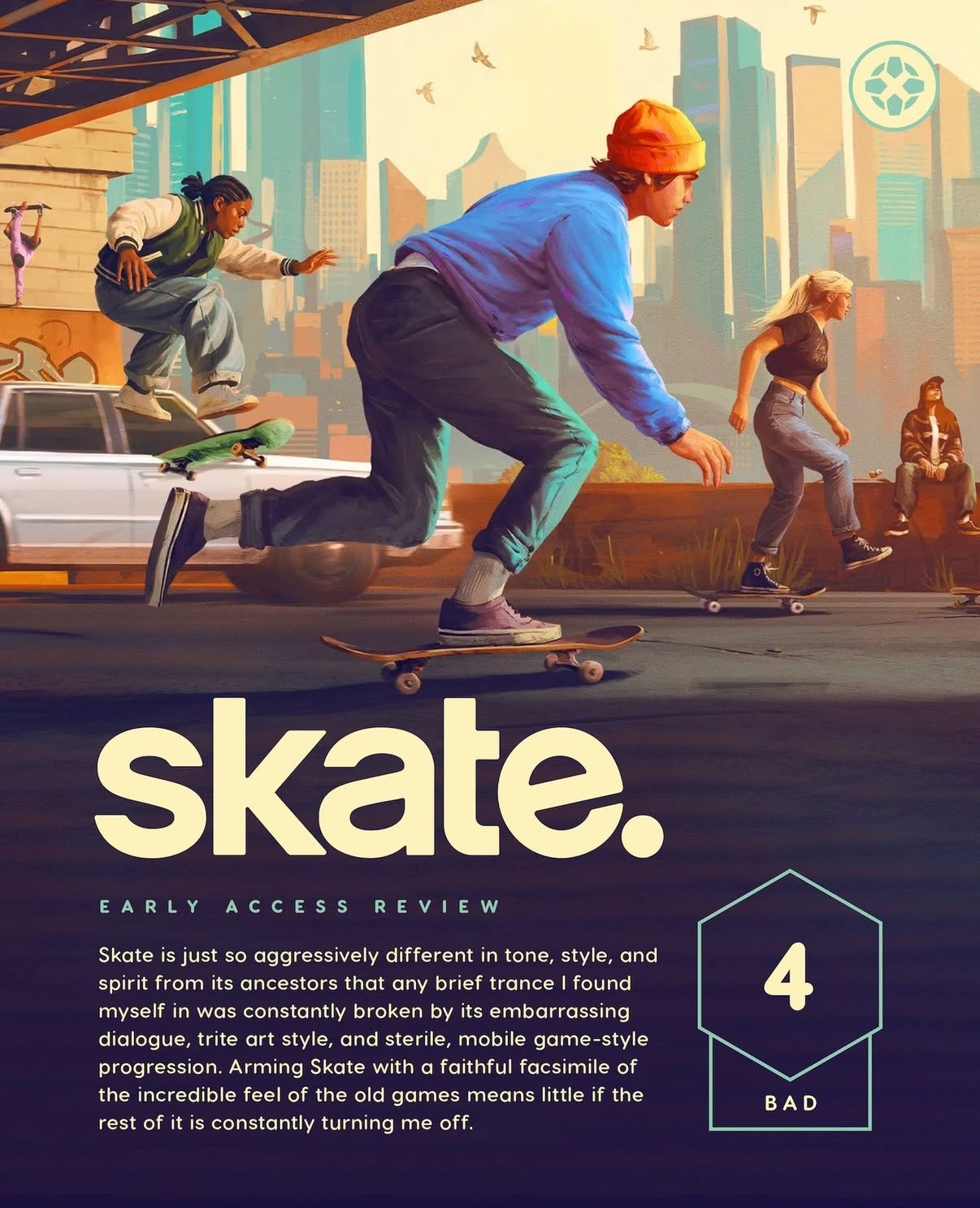
But the truth is also that the company has been steady in its performance but a far cry from skyrocketing growth. Everything feels a little bit dated. Some of the newly released games like Skate (a successful franchise in its own right) have received pretty bad reviews - and that’s putting it mildly.
EA’s stated goal was to grow to 1 billion players by 2029. Its progress towards that was fairly slow. One of the biggest reasons is its mobile gaming division. In a company and culture that was born out of the success of AAA PC and Console gaming experiences, mobile gaming to this day still feels like the unwanted stepchild - which has led to misaligned incentives.
Mobile - the ugly stepchild
To win in mobile, you need to be great at both creative and performance marketing. Paid user acquisition is the name of the game - and paid UA for mobile has been in its infancy, especially compared to the internal budgets and resources that are allocated to all games and teams on the AAA side. PLus, the incentives so far have been holding a path to true scale in mobile back. Rather than tying performance marketing goals to performance metrics like return-on-ad-spend (ROAS), which takes the actual spend over the lifetime of an acquired player into account against the cost to acquire said player, marketing has been measured against download targets - entirely ignoring the quality of the player downloading the game.
Where EA can win under its new owners
This, as well as areas around operational efficiencies in game development, are aspects of EA where a new ownership can bring a needed and useful reconfiguration to unlock growth.
Here are a four specific areas in which EA can win through this deal:
Much needed organizational change - as a publicly traded company, protecting the stock price often gets in the way of much needed change that comes with the inevitable short term pain reflected in a lower stock price. Being a private company takes away the spotlight and gives EA the time and space to do what is right.
More growth, and discipline, for mobile - ideally there’s a transfer of knowledge between Scopely, arguably the best mobile game’s publisher globally right now, and EA. Leveraging the internal best-in-class practices and knowledge that the Saudis have access to could induce a much needed jolt into EA’s mobile organization.
Focus - EA and its new owners will shed some assets and double down on what’s working well first, leaning into titles and IPs that have an established audience.
Transmedia - EA has been trying to sell itself to media companies like Disney for years now. The appeal was always to combine sports games with entertainment channels and sports rights like ESPN. This move could make EA’s transformation into a multi-faceted media company a more realistic scenario. What if the rights to the Saudi Pro Football League were exclusively distributed via a TV channel and EA’s biggest franchise FC? Live entertainment would blend in with gaming. You can add live events to the mix, merchandise, even sports betting - gaming and football form the foundation.
It’s not a far-fetched idea - the Spanish pro football league is already called LaLiga FC Sports. And even with titles like Battlefield, there’s an interesting strategy around bringing EA’s gaming IPs into the physical world. Remember the trillion dollar city Qiddiya the Kingdom is building? It’ll have its own district just for gaming experiences. Why not have a laser tag arena modelled after the Battlefield maps with exclusive gear and apparel from the game people can wear in real life. The opportunities are endless.
Deep pockets - but no unchecked spending
One of the biggest benefits this deal brings for EA is money. The pockets of Saudi Arabia are deep. Paired with their unwavering commitment to their Vision 2023 project, we can be sure that they will continue to fund whatever change is needed to allow EA to grow.
But: the well of money isn’t endless. They’ll want to see returns and impact. Just ask the team that has been pouring billions into making the city of Qiddiya a reality. After years of unchecked spending, people started to have a tighter grip on their check book to ensure money gets spent where impact is real.
I recently joined the PocketGamerbiz podcast to talk about my new book Press Play - Why Every Company Needs a Gaming Strategy, and what inspired me to write it. Part 1 of the 2-part podcast series dropped this week - check out the episode below to learn more about the book and why brands have to be in gaming if they want to stay relevant with consumers.
Playdemic and Golf Clash always seems to be left out when listing EA’s IPs despite it still remaining the #1 sports title on mobile in the U.S. and going strong almost 9 years in! I don’t think EA consider that mobile franchise to be an unwanted stepchild.