


Dear Readers,
What a whirlwind week this has been. Meta CEO Mark Zuckerberg revealed in what can only be characterized as a strange podcast episode with manosphere darling Theo Von that his company is working on AI companions to give Meta users more real friends. Now, there’s a lot that’s problematic with that idea and his plans, including the fact that neither he nor his company ever took responsibility for its track record in vastly accelerating a mental health crisis and causing serious harm to teenagers. He also claimed to be drinking coffee only recreationally because he doesn’t like any chemicals in his body and that he is raw-dogging life.
I’m not sure he knows what raw-dogging actually means. But more on that and the misguided plan to solve loneliness later. First, let’s get into the headlines.
Trump announced 100% tariff on foreign-made films to make Hollywood great again
Speaking of misguided - in the latest tariff head fake of the Trump administration President Trump announced a 100% tariff on movies and TV shows produced abroad. While the practicalities of this are still unclear, conceptually it doesn’t make sense. First of all, Hollywood doesn’t need to be saved from any sort of foreign entertainment forces. Hollywood’s problems run deeper and have more to do with antiquated distribution models, a mismatch with consumer evolved needs, and pressures from technological progress aka streaming. In fact, the US has a $15 billion trade surplus with other countries when it comes to entertainment.
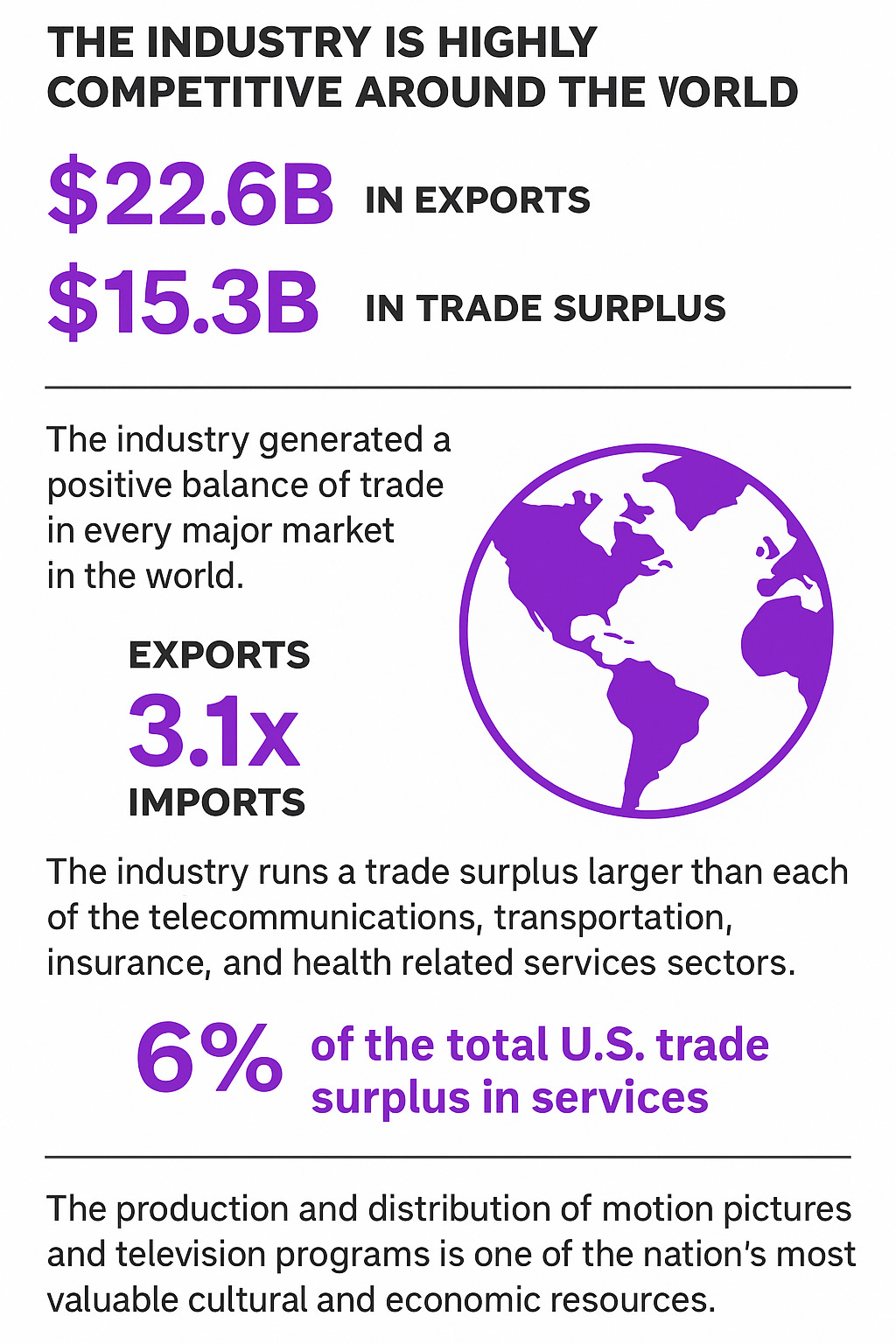
All these tariffs will do is trip up and erode the performance of market-leading companies like Netflix. More than 50% of Netflix’s content is produced overseas, an investment in the region of $8 billion. Why? Because the company built an incredible supply chain around guaranteeing high quality content at a fraction of the cost - a film crew, lighting experts, and sound engineers cost less in Barcelona than they do in Los Angeles. It’s that simple. Analysts are estimating that these tariffs can take down Netflix’s operating margins from 30% to about 16% - and this doesn’t take any retaliatory tariffs from other countries into account.
Netflix, Warner Bros., Paramount might be in for a bumpy few weeks and months here.
OpenAI’s new structure is a compromise
In a blog post on Monday OpenAI CEO Sam Altman announced that the ChatGPT maker will convert its for-profit arm into a public benefit corporation to satisfy investor demands and allow the company to take on additional funds in the future. Under this structure, the company’s nonprofit board not only becomes a significant shareholder in the public benefit corporation, it will also maintain control over the startup. The latter is a big shift from the original plan where Altman and team were looking to see the nonprofit cede control over the company and become a shareholder only.
This compromise will help OpenAI raise additional capital as Altman believes “this is well over the bar of what we need to be able to fundraise” - for now. But with the ongoing lawsuit filed by Elon Musk and the tension between for-profit shareholder obligations and nonprofit values, it’s clear that this issue will linger and flare up occasionally. I’m convinced there will be a moment where OpenAI will have to find a way to truly become what it already is - a for-profit entity that is now in the business of delivering returns to its shareholders.
Mickey Mouse goes to Abu Dhabi
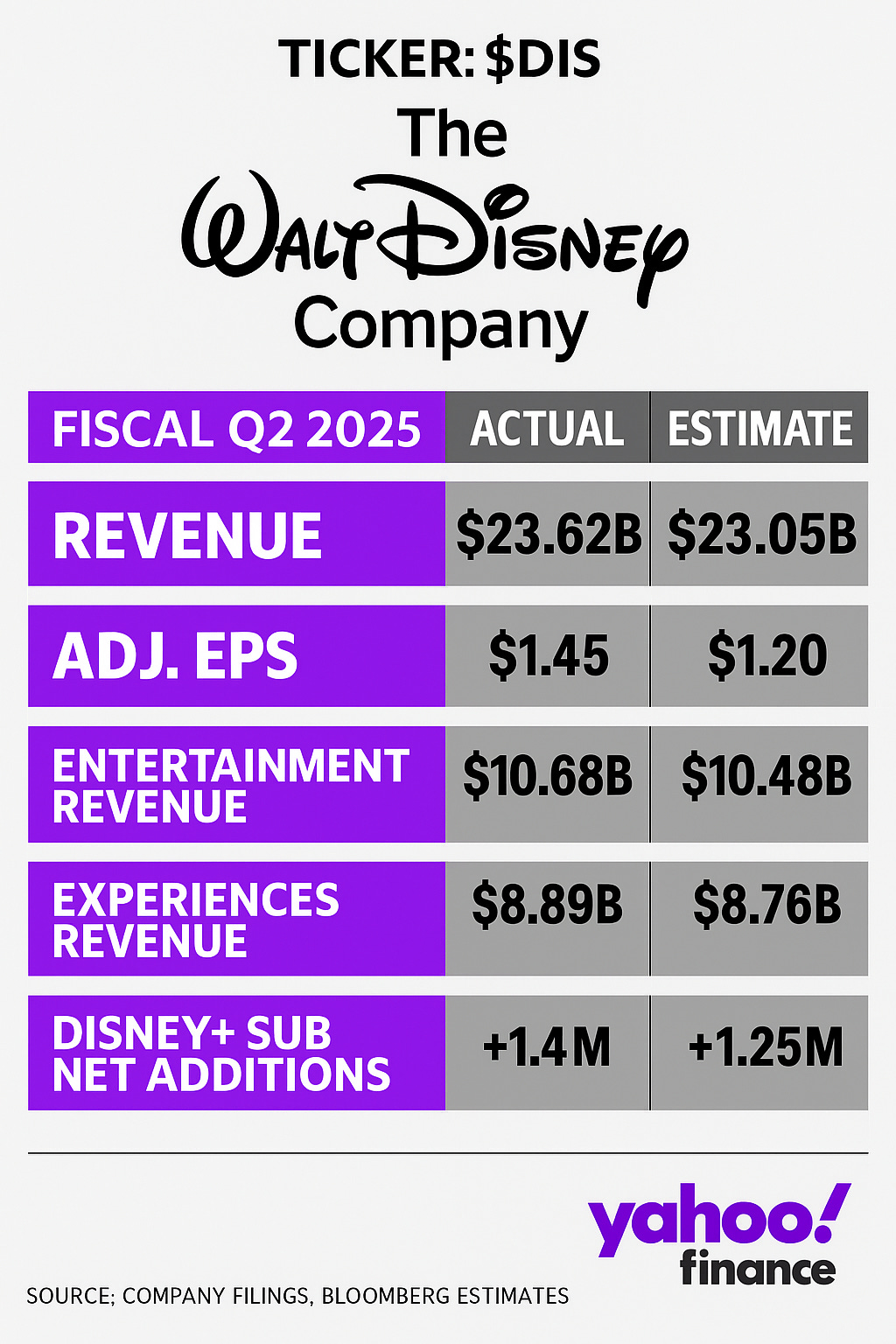
Disney shares ripped up by almost 11% yesterday on strong earnings across its entertainment and parks business units. It also added 1.4 million net new subscribers to its streaming service Disney+ - Disney’s stock is up almost 23% over the last month after a slow start to the year and an overall mixed past 12 months. The Mouse seems to be back.
As part of the strong earnings report, Disney announced that it would open its seventh theme park globally in Abu Dhabi, its first in the Middle East. Plans for the waterfront resort aim to blend Disney’s history and iconic characters with the cultural essence of the region - “a modern castle unlike anything we’ve ever created,” as Disney Experiences chairman Josh D’Amaro stated.
This move makes all the sense in the world for Disney. First, Miral, a state-owned developer based in Abu Dhabi, is funding the project and building it. Disney will lead the creative design and ultimately money by licensing its intellectual property, providing development and management services, as well as earning service fees and royalties based on the park’s revenue. Although there’s been no official statement on it, I would bet that Disney also receives some form of a tax-break or other incentive from the local authorities. After all, for Abu Dhabi and the Middle East, this is a massive win - Disney is one of the most iconic Western companies that has the ability to dramatically increase overall tourism for a region that still is still wrestling with unfavorable public perception (for right and wrong reasons).
Disney brings people together - which brings us to our story of the week on AI companions.
AI companions
Meta and its CEO Mark Zuckerberg are framing the company’s AI chatbot developments as friendly AI companions and a potential solution to the loneliness epidemic.
To be clear: loneliness is a real and a serious problem. In a Harvard study from just a few years ago, 36% of Americans reported experiencing “serious loneliness”. That number rises to an astonishing and worrisome 61% among young adults. During a podcast appearance this week, Zuckerberg said that the average American has less than three friends, but that there’s a need and an appetite for roughly 15 friends (not sure where he has those figures from).
This is how Zuckerberg describes the opportunity in his own words.
“Today, most of the time spent on Facebook and Instagram is on video, but do you think in five years we're just going to be sitting in our feed and consuming media that's just video? No. It's going to be interactive. You'll be scrolling through your feed, and there will be content that maybe looks like a Reel to start, but you can talk to it, or interact with it, and it talks back, or it changes what it's doing. Or you can jump into it like a game and interact with it. That's all going to be AI.”
What he is saying here is that there’ll be the next evolution of human interaction with AI bots - and he sees those bots becoming your friends.
Let’s look at the data. Here’s how people are using GenAI and bots and the dominant use cases.
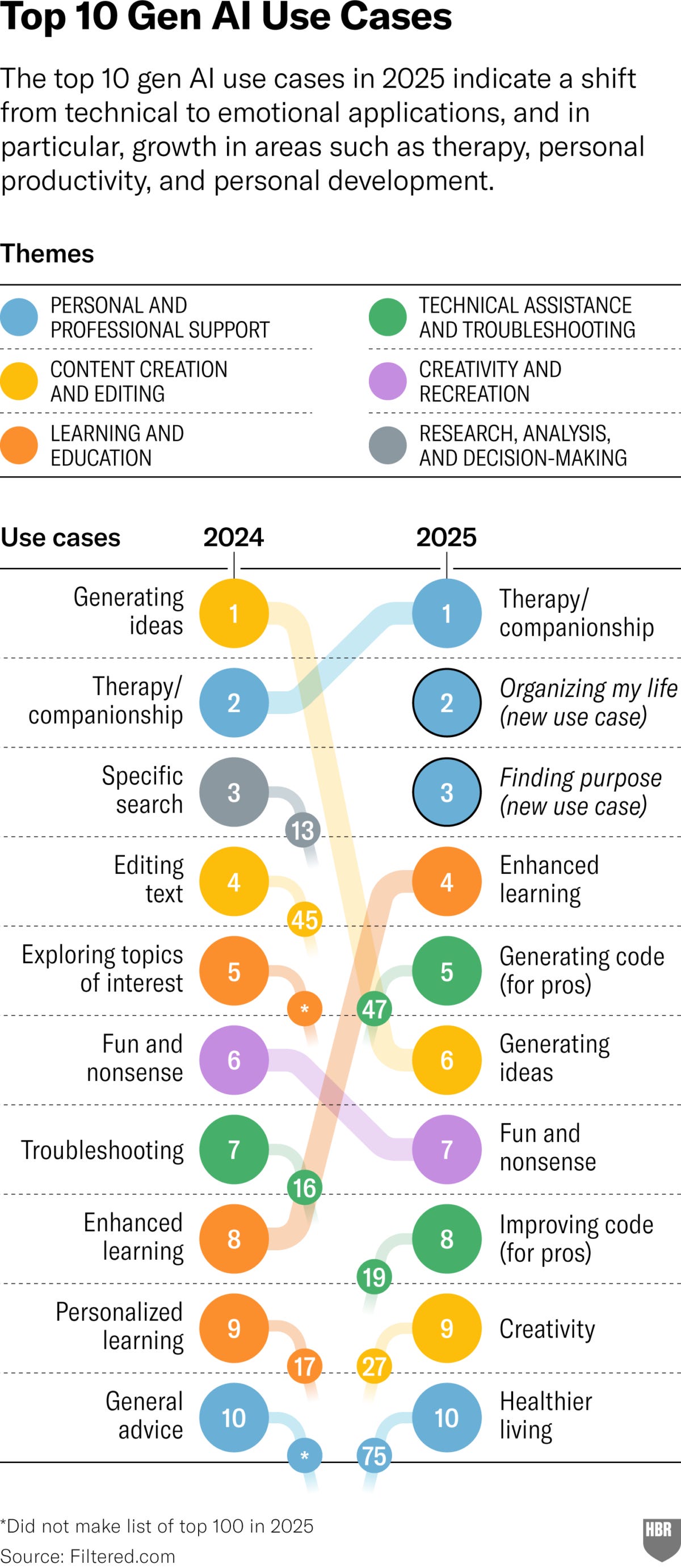
Therapy and companionship. Organizing my life. Finding a new purpose. Those are the top 3 use cases for AI in 2025. It says as much about the business opportunity Meta has spotted here as it does about the state of human beings in the world.
Most of the concerns that are being expressed around Meta’s strategy here center on the further exploitation of user data and the lack of care regarding potential off gasses and negative consequences from the technology it deploys. Meta’s troubling track record when it comes to its apps, algorithms and the effects on mental health are well researched and documented - as is its inability to take any accountability for it. Now imagine users actually forming relationships and bonding with AI companions. With trust in place, it’s easy to see how users would share in long chats and conversations some of their most personal and intimate feelings and emotions with a company like Meta - only for Meta to turn around and use the data as additional potent gasoline on its advertising fire. It will lead to dark places when the appropriate safeguards aren’t in place. And it’s already happening as documented by the recent Wall Street Journal article titled “Meta’s ‘Digital Companions’ Will Talk Sex With Users—Even Children.“ Looks like Meta and Zuckerberg have learned nothing despite being sued by families and over 33 states of mental illnesses and suicides caused by its apps.
I think there’s another line of argument that is just as important and currently overlooked in the public debate. Meta doesn’t have the data and the ability to actually understand our human needs and what would actually help us, and how to establish real human connection. Additionally, nothing beats being in nature and being with friends and fostering real social connection with real people. So while AI can absolutely play a role here, it should be geared towards removing the barriers and friction points that are causing the loneliness epidemic and facilitating human connection in real life.
A trip to Disneyland with friends and to meet new people is a far better investment into your mental health than believing an AI bot is your actual friend - especially if they come from Meta.
I’ll be presenting insights from my upcoming book Press Play - Why Every Company Needs a Gaming Strategy at the Digital Age Tech Summit in Istanbul next week. Subscribe to and share Technically Entertaining with your friends and colleagues to not miss out on behind-the-scenes insights from conversations with executives from companies leading the way at the intersection of entertainment and tech.