


Dear Readers,
My new book Press Play officially lands tomorrow. Condensed into just under 200 pages, you’ll find behind-the-scenes insights from executives and leaders from top global companies like Adidas, Unilever, BMW, or the New York Times laid out into a strategic blueprint any company can apply to make their journey into gaming a success.
Too many companies have prematurely concluded that gaming wasn’t for them. Or that the ROI wasn’t there. Unilever by its own admission lacked the talent and skills to scale its strategy after it had integrated its shampoo brand Dove into the popular video game The Sims.
However, too many times companies get the critical first step for this, and quite frankly any, strategy blatantly wrong: understanding the target audience and its true needs, desires, motivations, and more. If that baseline is missing, is based on pure assumptions, or informed by the wrong data, it will lead companies to creating gaming experiences that consumers and players will perceive as inauthentic (which is literally the death bed for a brand with young audiences especially).
This point is so crucial that I emphasized it during my keynote at the Gamescom Congress a couple of weeks ago.
At Gamescom, there were almost 34,000 trade show visitors, many of them not representing game developers or publishers - but non-endemic brands from all over the world. Pet food, bathroom appliances, chemicals, logistics - it felt like every company and industry is starting to realize the power of video games and is now searching for ways to engage “gamers”.
One of these companies was Henkel, Germany’s consumer goods giant and among the top 10 consumer goods companies globally. Henkel was touting the collaboration between its famous Schwarzkopf hair care brand and the video game Final Fantasy XIV. It’s promoting the ability for people to express their individuality both in the game by being able to customize your character's hair with unique colors and styles, as well as offline via game-inspired hair dyes.
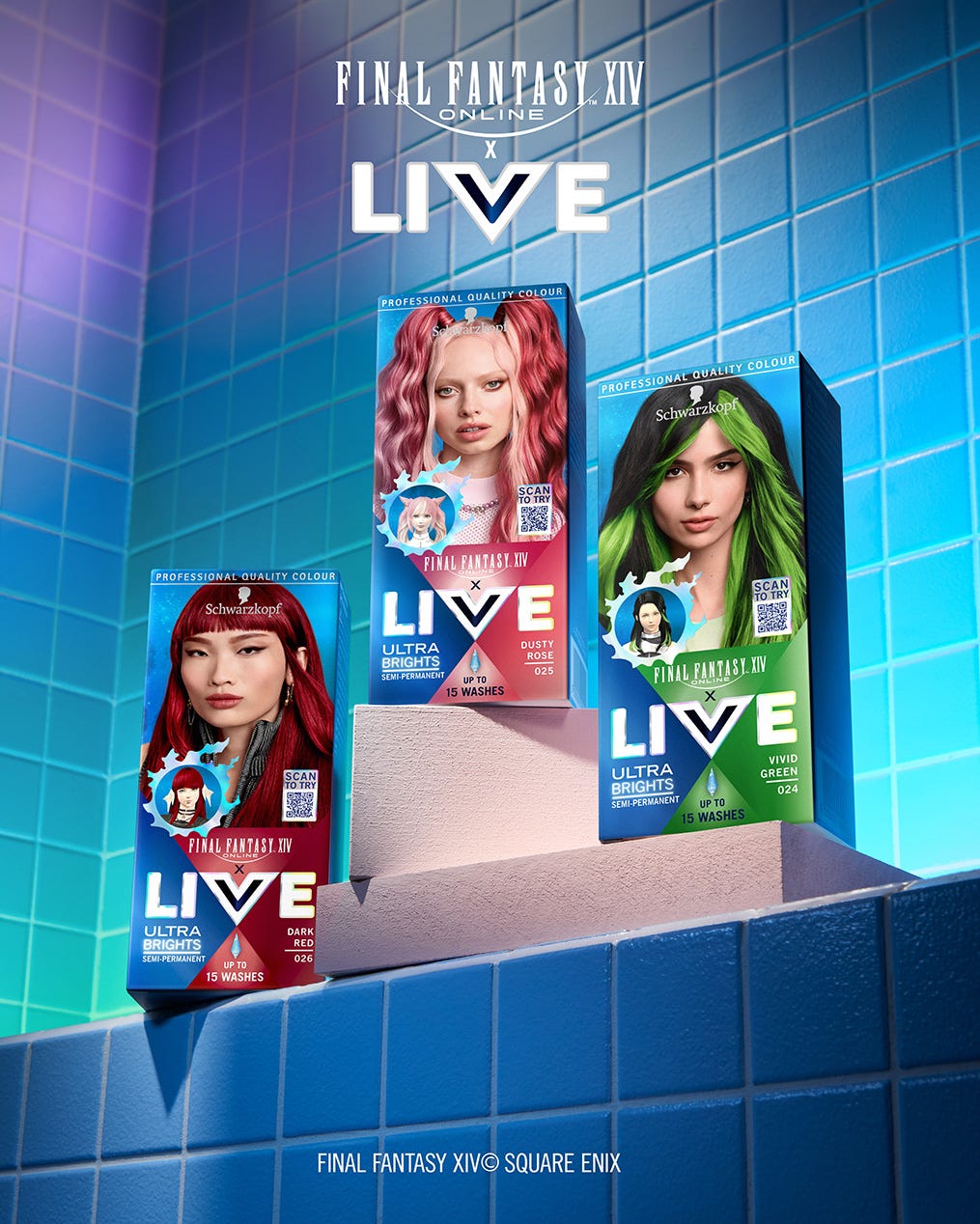
Urgh.
This is exactly one of those gaming activations done by a brand without a real strategy that is grounded in an in-depth understanding of their audience. It will fall flat in terms of results. Leadership will conclude gaming doesn’t work, or at least not for their brand - and they’ll be set back a decade like Unilever once was.
So if Henkel and their team at Schwarzkopf were to start from scratch, how could they go about it?
First of all, rather than commissioning a big audience research consulting project that takes 6-12 months, costs $1-2 million, and delivers 160 static Powerpoint slides containing more high level demographic data that you already had access to any way, which are outdated the moment you receive your report, they should tap into tools like Elaris. It’s the first AI built on real human psychology, not scraped web content.
You can log in and immediately interact with over 400,000 real audiences and understand their motivations, values, and emotions. You can also instantly see who your ideal audience is for your brand/product as well as any overlap or fit for potential collaborations. You can also create conversion-ready content that resonates, build creative briefs, or launch personas with a click of a button.
Using Elaris, I followed a simple 3-step process to build a simple campaign in gaming for the Schwarzkopf brand in less than 5 minutes.
Step 1: Game Affinities
In Elaris, I selected the audience for the Schwarzkopf brand. Then I simply asked Elaris, what top video game preferences this audience has. These are the results.
Top Games for the Schwarzkopf Audience
This audience shows the highest affinity for casual, accessible, and mobile-friendly games. Here are the top games they play, based on their expressed preferences:
Candy Crush Saga (5.5%)
Farm Heroes Saga (5.5%)
Hay Day (4.1%)
Angry Birds (4.1%)
Angry Birds Classic (4.1%)
Design Home (4.1%)
“Highest affinity for casual, accessible, and mobile-friendly games” - if you have ever opened a Final Fantasy game, you know that this isn’t exactly a fit here.
But I wanted to sense-check this initial output and hence asked Elaris specifically if this audience had an affinity for Final Fantasy. The output was very clear.
Affinity for Final Fantasy
This audience does not show a notable affinity for Final Fantasy. The game does not appear among their top preferences, indicating that it is not a significant interest within this group.
Glad we figured that out. Moving on to step 2.
Step 2: Dominant Psychological Traits
With some ideas for games that are a much better fit for the Schwarzkopf brand, I now wanted to learn more about the core drivers and needs of this audience to help me define my positioning and frame my messaging so it optimally resonates with the audience.
I asked Elaris for a breakdown of the top psychological traits of this audience to give me the right insights.
Most Important Psychological Traits for Messaging
When crafting messaging for this audience, focus on these key psychological traits:
Internal Cohesion: very high (85th percentile) ⏫
Emphasize unity, collaboration, and a sense of belonging. Messaging that highlights community, teamwork, or shared values will resonate strongly.Self-Esteem: very low (11th percentile) ⏬
Use supportive, confidence-boosting language. Avoid messaging that could trigger self-doubt or comparison. Instead, focus on empowerment and gentle encouragement.
These are just two traits of a longer set Elaris provided, but this is already enough to shape our strategy as well as see how far away the actual Schwarzkopf campaign was from hitting its target. Remember it was positioned around people expressing their individuality? This couldn’t be further off from emphasizing unity, collaboration, and a sense of belonging.
Moving on to step 3.
Step 3: Create A Marketing Brief For Schwartzkopf & Design Home Campaign
I chose Design Home as it was among the top 5 games the Schwarzkopf audience enjoys. I asked Elaris for a full marketing brief as well as first visuals. Below are some samples from the marketing brief.
Introduction
Schwarzkopf’s audience is diverse but united by a strong preference for internal cohesion (very high, 85th percentile ⏫), average openness (47th percentile ↔️), and a low drive for transformation (30th percentile 🔽). They value stability, collaboration, and practical creativity. Design Home, a game centered on interior design and self-expression within a structured environment, is a natural fit for this group.
This campaign aims to seamlessly integrate Schwarzkopf’s haircare products into the Design Home experience, reinforcing the brand’s relevance in everyday routines and group-oriented, creative activities.
Creative guidelines - content themes
“Everyday beauty, together.”
“Refine your routine, enhance your space.”
“Small changes, big comfort.”
Generate creative concept for an Instagram ad


Elaris even gives you a reason for why it made these images.
The visual is created to:
Appeal to the audience’s strong affinity for Design Home (4.1%) and their preference for collaborative, harmonious environments (very high internal cohesion, 85th percentile ⏫).
Feature avatars with different hair types to reflect inclusivity and the Schwarzkopf brand’s focus on haircare, while subtly integrating products to avoid overt sales messaging (aligns with average openness, 47th percentile ↔️, and average agreeableness, 52nd percentile ↔️).
Use a clean, modern design and a collaborative scene to resonate with the audience’s desire for teamwork and positive relationships, while the call-to-action leverages their balanced motivation for achievement and mastery (both average, 46–51st percentile ↔️).
This approach ensures the ad feels relevant, inviting, and aspirational without being pushy.
In-Game Asset Concepts for Schwarzkopf x Design Home
Option 1: Collaborative Room Styling Challenge
Asset: A special “Schwarzkopf Salon Suite” room template.
Description: Players work together to design a luxurious home salon, choosing furniture, décor, and Schwarzkopf-branded haircare displays.
Why: This leverages the audience’s very high internal cohesion (85th percentile ⏫)—they thrive in environments that encourage teamwork and shared purpose.
Even if this isn’t perfect, it would have been 100x times better than what Schwarzkopf did with Final Fantasy. At the very least, it’s a much higher baseline to ideate from.
Gaming is arguably the biggest opportunity space brands have to attract, engage, and convert the modern day consumer. Companies shouldn’t squander this opportunity by already getting the critical first step wrong: understanding the target audience - especially in times when it’s never been easier and faster to get access to high quality data via tools like Elaris.
My new book, Press Play - Why Every Company Needs a Gaming Strategy, hits stores tomorrow. If you haven’t grabbed yourself a copy yet, now’s your chance so you stay in the know - and while you’re at it, maybe get your friend a copy too.