


Dear Readers,
When President Donald Trump announced his plan to impose a 100% tariff on foreign made movies and TV shows, industry insiders rolled their eyes at the idea. The United States runs a healthy $15 billion trade surplus with the rest of the world on its entertainment properties. Though the action itself is misguided, the administration’s intuition around wanting to protect Hollywood is actually on point. Entertainment executives in board rooms across the Western hemisphere know that Chinese content is the main driver of global viewership growth, but still only represents a tiny portion of the content budget. Companies are not just missing an opportunity - they're about to get blindsided.
This is a shift that Hollywood is only beginning to understand. According to WIRED, more than 50% of US Netflix subscribers sampled Chinese shows, and iQiyi reported that monthly active users, total viewing time, and Chinese-content views doubled in North America within a year
The roles are reversing faster than anyone expected. For decades, China consumed Western entertainment. Now, the world is consuming Chinese stories - and most Western executives are scrambling to understand how it happened and what comes next.
Here's the untold story of how Chinese entertainment went from Hollywood's biggest customer to its biggest competitor.

The $1 Billion Breakthrough That Changed Everything
Black Myth: Wukong Shattered Every Assumption
In August 2024, a game developed by a relatively unknown studio in Shenzhen accomplished what decades of Chinese cultural exports couldn't: it made the West pay attention. Game Science's Black Myth: Wukong generated nearly $1 billion in revenue by year's end, with 25% of players outside China - a breakthrough that stunned an industry accustomed to Chinese games failing to cross cultural boundaries.
The game's success wasn't just about impressive graphics or innovative gameplay. It was rooted in Journey to the West, one of China's most sacred literary works, yet it resonated with Western audiences who had never heard of the Monkey King. Steam shows that Black Myth: Wukong maintains a 96% positive rating across its player base.
The Three-Body Problem: Netflix's $200 Million Bet
While gaming grabbed headlines, Netflix quietly made an even bigger bet on Chinese IP. The Three-Body Problem's production budget reached $200 million, making it one of the most expensive science fiction series ever produced. The show's global success - viewership data from Netflix shows millions of household views in the first month - proved that Chinese literary IP could anchor premium Western productions.
The significance goes beyond individual successes. Deloitte's Media & Entertainment Trends 2024 reveals that Western streaming platforms are now actively seeking Chinese IP, with 34% of major studios having dedicated teams for Asian content acquisition.
The Three-Decade Journey: From Closed Markets to Cultural Domination
Hollywood's Golden Age in China (1994-2015)
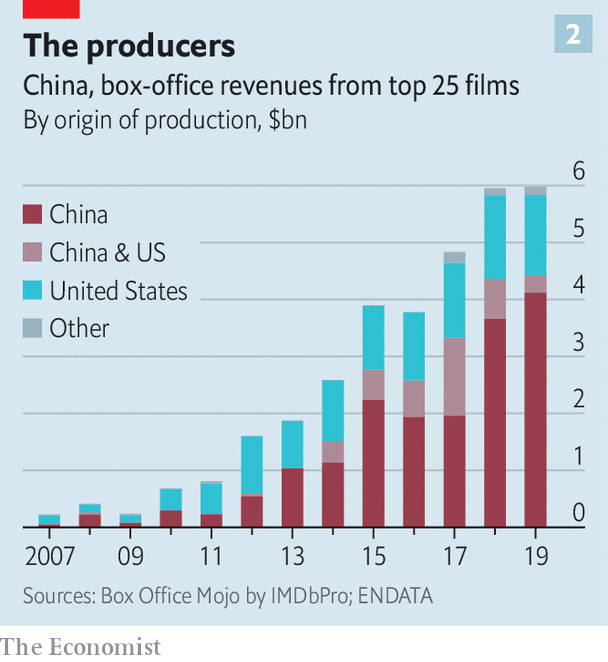
The relationship began in 1994 when China's Ministry of Radio, Film & Television allowed limited revenue-sharing foreign films to revive its stagnating cinema sector. China’s box office performance shows the transformation was dramatic:
1994: 10 foreign films allowed
2008: 25 foreign films, $1.5 billion total box office
2015: 34 foreign films, $6.8 billion total box office
Hollywood dominated these early years. Box office results reveal that foreign films, primarily from Hollywood, captured the majority of Chinese box office revenue during the 2000s. Blockbusters like Titanic, Avatar, and the Fast & Furious franchise found massive audiences hungry for Western spectacle.
The Gaming Revolution and Regulatory Reality
Gaming followed a more turbulent path. Starting from underground PC gaming in internet cafés it now comprises a $50 billion mobile gaming ecosystem.
Key Regulatory Milestones:
2000-2015: Console ban period, PC gaming flourishes
2018: Nine-month approval freeze under new National Press and Publication Administration
2019: Only 185 imported games approved, down from 400+ in 2017
2024: NPPA's Current Statistics show just 127 foreign games approved
The message was clear: Western companies could access Chinese consumers, but only on China's terms and with increasingly stringent conditions.
The Great Reversal: China's Export Explosion
The Box Office Paradox
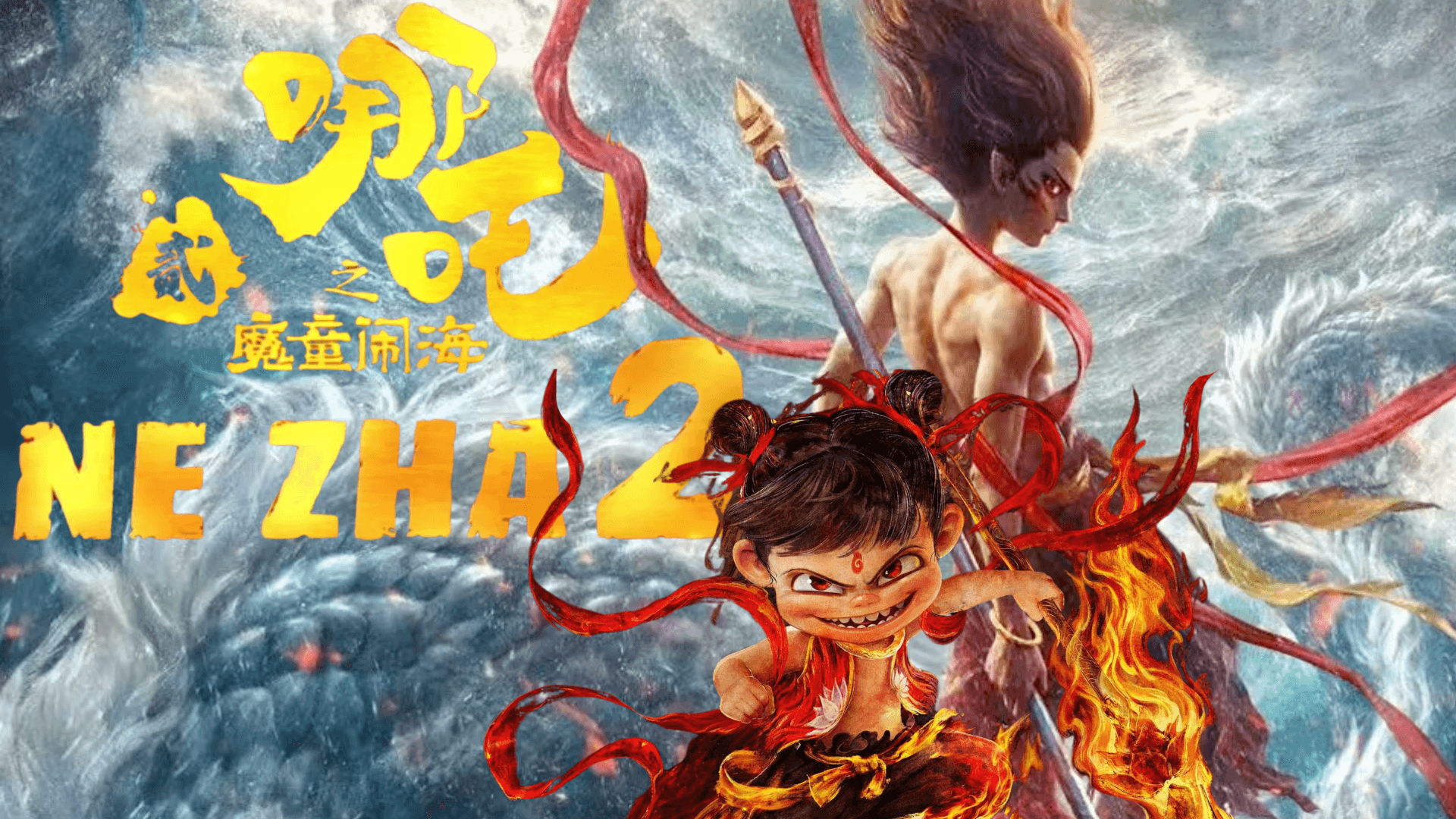
Here's where the story gets interesting. While Chinese films began dominating domestic screens - capturing 80% of box office revenue in 2024 - their international performance remained limited. This is especially reflected in China’s breakout hits of 2024:
Ne Zha 2: $2.2 billion domestic, $20.8 million US box office
The Wandering Earth 2: $604 million domestic, $4.2 million US box office
Full River Red: $692 million domestic, $1.8 million US box office
The numbers expose a fundamental challenge: Chinese films optimized for local audiences struggle to translate internationally, despite massive domestic success.
The Acquisition Strategy That Almost Worked
Chinese companies didn't just export content - they tried to buy the distribution networks, reflecting a long-term strategy: secure footholds in Western markets through ownership, capital, and distribution.
2012: Wanda Group acquires AMC Theatres for $2.6 billion
2016: Wanda acquires Legendary Entertainment for $3.5 billion
2016: Tencent invests $1.8 billion in film co-financing deals
2017: Alibaba Pictures invests $1.2 billion in Hollywood partnerships
The strategy seemed sound: control distribution to guarantee access for Chinese content. But geopolitical tensions and regulatory scrutiny forced retreats. By 2024, most Chinese investors had exited their Hollywood positions.
Gaming's Global Domination
Chinese gaming tells a completely different story. Sensor Tower's Mobile Gaming Report 2024 shows that Chinese developers achieved what filmmakers couldn't: true global reach.
Chinese Games' International Success:
Genshin Impact: $6.2 billion lifetime revenue, 70% from outside China
Honor of Kings: $2.8 billion revenue, 60% international
PUBG Mobile: $9.3 billion lifetime revenue, 85% international
Mobile Legends: Bang Bang: $1.9 billion revenue, 95% international
Chinese games generated $18.6 billion in overseas revenue in 2024, representing 67% growth from 2022. Overseas markets now account for roughly 27% of Chinese game companies’ total revenues.
The Technology Advantage: Why Games Succeeded Where Films Failed
The Mobile Gaming Revolution
Chinese gaming companies succeeded internationally because they mastered mobile-first development when Western companies were still focused on consoles and PC.
Chinese companies rode this wave from the start and now produce many of the top mobile titles. China’s massive domestic user base (over 700 million gamers) gave its developers scale and data to refine their products in a competitive environment. Chinese companies' free-to-play expertise, developed for price-sensitive domestic markets, translated perfectly to international mobile gaming.
The Investment Flow Reversal
While geopolitical or regulatory shifts can temporarily slow or reshape deals, the overall pattern reflects deepening cultural and commercial ties between Western entertainment and Chinese media ecosystems.
While, in the past, Chinese companies would heavily invest to bring Western content to China, this dynamic is now reversing.
From 2014 to mid‑2016, Chinese investors poured over US $5 billion into equity stakes in U.S. film companies and co‑finance deals.
Now, Western studios (like Warner Bros., Universal, Sony) increasingly co-finance or license IP for China-specific content to meet import quotas and appeal to domestic audiences.
What's Coming Next
Ignoring Chinese entertainment is not an option for Western media firms that want to remain globally relevant. Chinese companies are not just exporting hit content – they are rewriting global pop culture rules on their own terms. And they have enormous domestic scale and government support behind them (for instance, China’s 14th Five-Year Plan explicitly calls for expanding Chinese cultural influence abroad, with funding to match).
Part two will reveal the strategic playbook Chinese companies are using to succeed in Western markets - and why this matters to players in the West. We'll examine:
The government support system that's funding China's entertainment expansion
Strategic partnerships between Chinese creators and Western distributors
Technology platforms that are bypassing traditional distribution entirely
The next wave of Chinese IP that will reshape entertainment in 2025
The companies that understand these strategies will position themselves to profit from the largest cultural shift in decades. Those that ignore it will find themselves competing against better-funded, more agile competitors who already understand the new rules.
The Chinese entertainment revolution isn't coming - it's already here. The question is whether Western companies will adapt fast enough to remain relevant.
Don't miss Part two of this analysis, where we'll reveal the insider strategies and government support systems that are powering China's global entertainment dominance. Part two will drop next week. Be sure to subscribe to Technically Entertaining now to get exclusive insights from the executives and creators who are reshaping the $200 billion global entertainment industry.