


Dear Readers,
Do you remember the days as a kid when you used to play with an inconceivable amount of tiny colorful bricks and other parts? How vivid are your memories when you think back to those moments?
If LEGO was as much a part of your childhood as it was in mine, the answers to the above questions are likely an empathetic “Yes!” and a “10 - I can feel the bricks on my hand just thinking about it.”
My mind can immediately go back to the day when my grandpa built a ship with wheels with me. It’s a day I’ll never forget.
It’s the legacy LEGO the company has built. LEGO is the literal building block of growing up for children, parents, and grandparents alike.
I was in London recently and had a moment to visit the LEGO store in Leicester Square. It was on a regular Tuesday, around noon. And there was a line of about 30 school kids with their teachers waiting to go in. Inside, the store was packed with people spanning about 4 generations. LEGO is as en vogue as it's ever been. The numbers don’t lie either. Since 2019, the company has doubled its revenues to $10 billion.
Yet, the company based in the idyllic town of Billund in Jutland, Denmark, is currently putting the building blocks to its own future in place. The question it is wrestling with: how do we bring the Lego legacy into a digital-first future?
The most critical building block in that pursuit are video games.
LEGO is far from being new to video gaming. In fact, it was one of the first big brands that actively went into the space already in 1997. It began by licensing its iconic IP to other game developers and studios to make great games with. After seeing great success, Lego decided to bring video gaming in house and build games themselves - a typical move by (larger) companies with strong IP. Not to give the punchline away, but these a) moves don’t always work and b) are rarely the only attempt by companies to try to internalize game development. Disney, who went into video gaming about the same time as LEGO did, is a great example of the ups and downs this journey can entail.
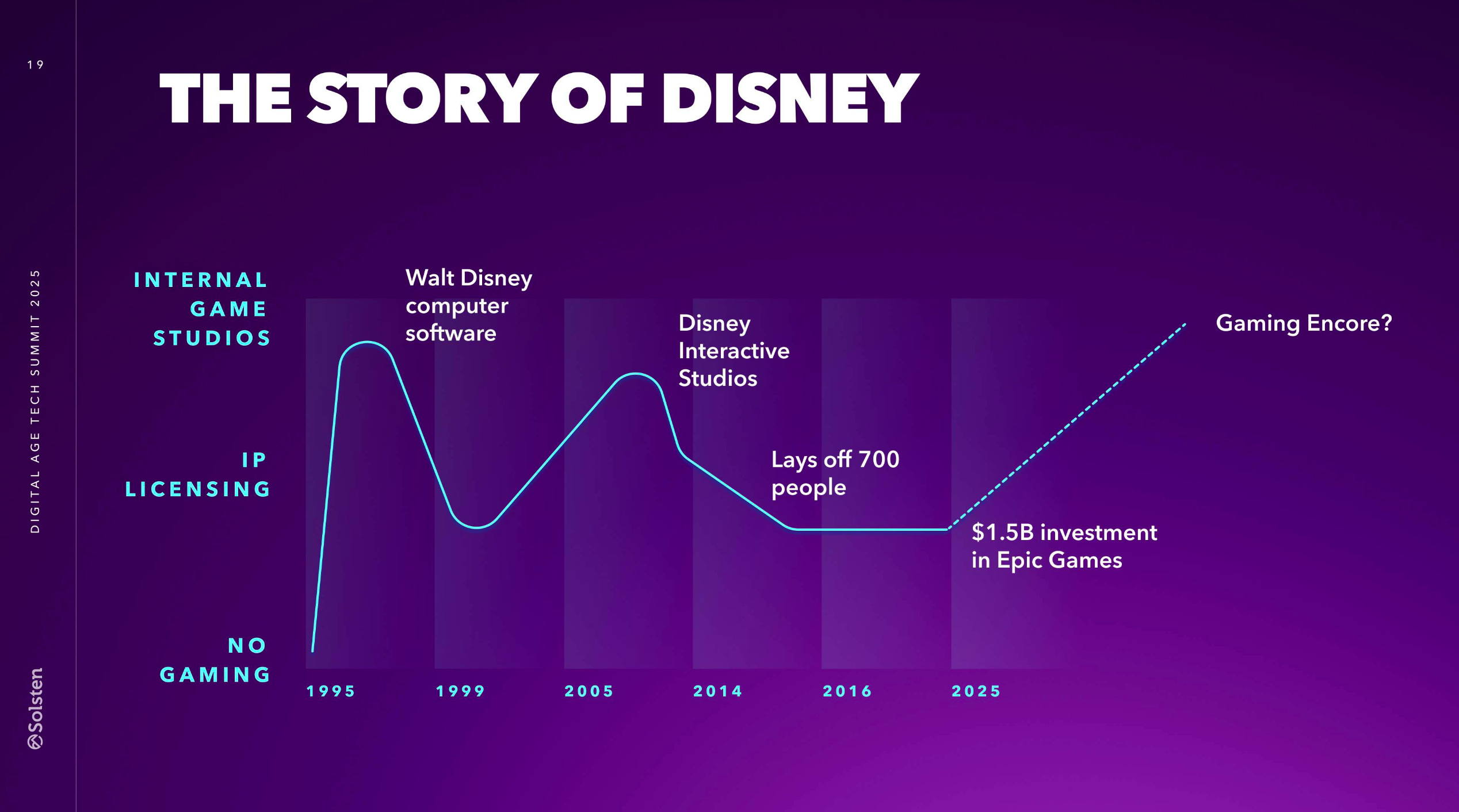
Lego Media was formed (2000) and renamed to Lego Interactive shortly after (2002). The studio released its marquee title Lego Universe - a massively multiplayer online game akin to Minecraft for example. The game attracted about 2 million players, but struggled to turn free players into paying subscribers. At the same time, the other games Lego Island 2 and Lego Island 3 also failed.
The LEGO Group shut down Lego Interactive in 2004. 115 people lost their jobs. Lego was done making video games in house and instead went back to licensing its IP to other game developers.
Remind you of the Disney journey? Making games is hard (one of the many reasons I wrote a book about it, to help companies get it right).
Fast forward and video games are on the menu for the LEGO Group as much as ever. The appetizer was Lego Fortnite, effectively its own open world universe based on and connected to the popular video game Fortnite, that successfully launched in December 2023 and has attracted a total of 87 million players since its launch.
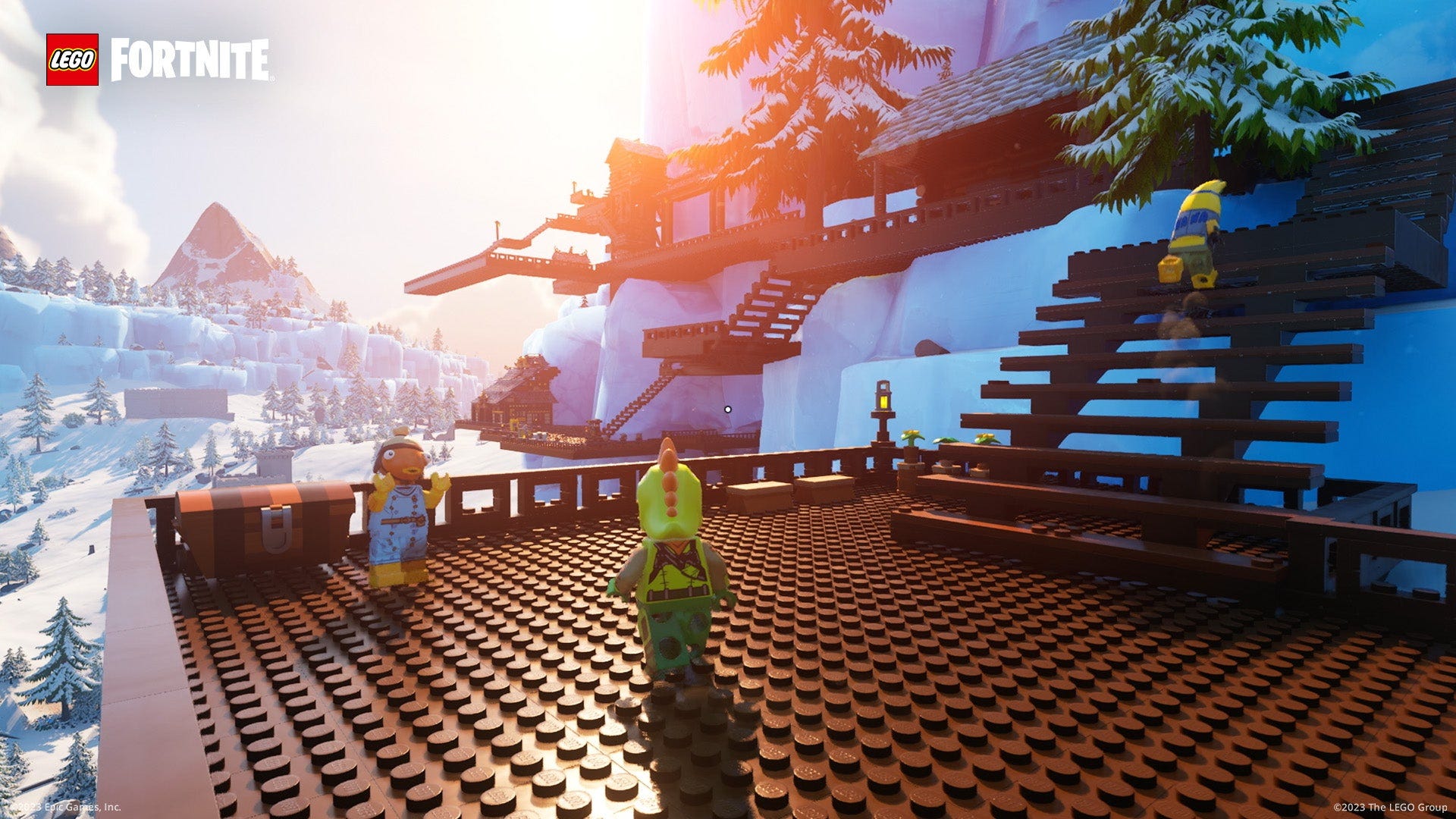
The game worlds of LEGO Fortnite are 20 times the size of the digital environment of the original Fortnite. Players can populate the world with any number of structures and builds made of virtual LEGO bricks. Since then, LEGO has added a number of different games into LEGO Fortnite, such as the popular titles LEGO Fortnite Odyssey or Brick Life - two entirely different games aimed at different audiences.
While the former is a survival game and is about adventure and crafting, the latter is a role-playing game that emphasizes social mechanics and connection with other players. Upon release, Lego Fortnite Odyssey quickly became the most popular game mode in Fortnite, surpassing even Battle Royale and Rocket Racing. Though the verdict is still pending about the long-term viability of these LEGO games, the company has tasted enough to be convinced that it was time for the main course.
“We can definitely say as long as we’re under the Lego brand we can cover experiences for kids of all ages, digital or physical. [Games development in-house] is something we’re building up.” LEGO CEO Niels B. Christiansen
Back to the future
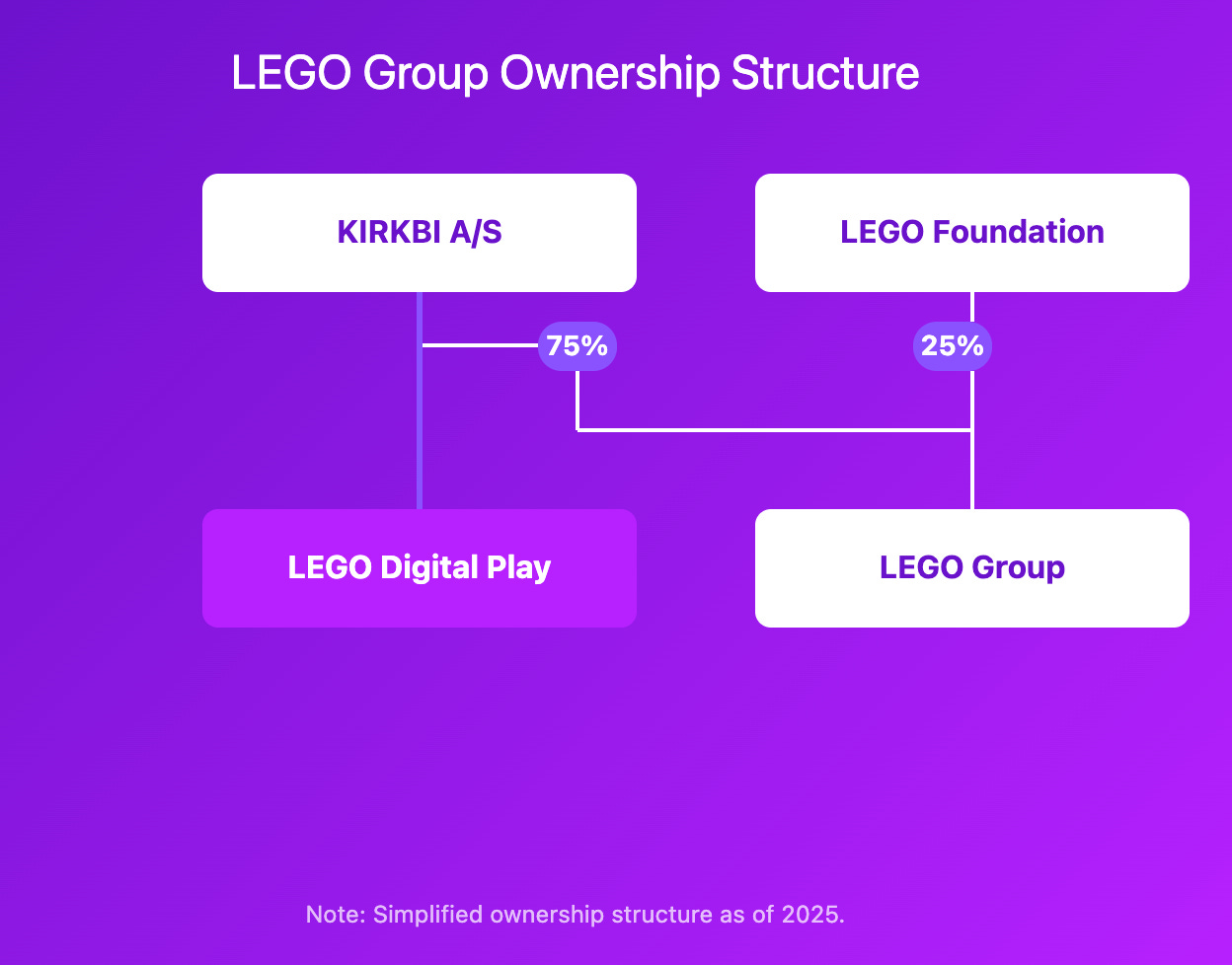
The company announced in March that it would create an entirely new entity, called LEGO Digital Play. The objective? To bring game development in house again to accelerate its journey into a digital-first future. But this time, the LEGO Group is following a different approach and applying 3 key principles from my upcoming book Press Play in the process.
Evolve the operating model
LEGO Digital Play will operate outside of the LEGO Group as a separate independent entity. While the LEGO Fortnite and IP licensing will remain embedded within the core organization in the broader sales and marketing function, LEGO Digital Play has a mandate to focus on developing a broad variety of entirely new games across all platforms utilizing the LEGO IP. The new entity will report directly to LEGO Holding CEO Niels B. Christiansen. LEGO Digital Play gets the best of both worlds: top-level executive buy-in while being freed from the shackles that come with being a part of a large organization.
Work with partners who have built what you need before
A key principle I highlight in my book, drawing from over 200 executive interviews and industry examples, is to work with experienced partners and hire talent who have demonstrated they can do the job you’re hiring them for. I think LEGO Digital Play has hit this one out of the park by bringing in Aaron Loeb as President of the new entity. His 30-year-career spans across gaming and entertainment, having built game development studios from scratch, scaled new games into global mega hits (Monopoly Go! ring a bell?), and led entertainment IP licensing for game development. Scopely, Kabam, EA, FoxNext Games - it’s hard to think of a better person for the job.
Deep audience understanding and audience-first development
The newly established team is taking a meticulous data-driven approach to developing new games, particularly when it comes to audience insights and understanding the unique motivations and needs the many different LEGO audiences have. Because one thing is as obvious as me buying another LEGO set this year: there is not one single LEGO user. Their unique superpower can be the ability to tie together insights into player motivations and preferences with Lego toy sales and general gaming market trends. It’s as close to a crystal ball as you could likely get.
Even with a lot of the ingredients in place, success is far from certain. The odds in new game development are simply stacked against you. So what makes internalizing game development for LEGO worth the investment and the risk?
Ownership of the customer interface
For the first time ever, it would give the company a real interface to consumers and fans of its brand and products. Unlike in LEGO Fortnite where data sharing is dependent on Fortnite creator EPIC Games and what they opt to disclose and share, with its own games LEGO owns all the generated data and insight. First-party data plus ownership of the consumer interface (the games) - it’s any company’s wet dream. Pair this with physical stores sales, ecommerce sales, LEGOLAND visits, and more, and you have a powerful customer intelligence that the company owns and controls end-to-end. This also puts them in a position to adopt and drive a lot more personalization. Here are 3 concrete applications.
Your LEGO identity - Think of something like a LEGO Pass, or your own LEGO avatar that effectively stores your transaction and play data. The next time you go to LEGOLAND to check in, it can recommend the rides and attractions to you that you most likely will enjoy.
Native ecommerce - LEGO could recommend new LEGO sets as purchase offers inside of the video games, and hence integrate commerce natively in-game.
Digital R&D and warehousing - All of the video games can effectively become a giant virtual R&D lab for new physical LEGO sets and toys the company might want to manufacture. So rather than going through the expensive and time consuming process of creating physical prototypes, it can launch 3D versions of new toys inside of the games and track in real-time what resonates the most with users - and use that data to inform the physical products it should actually make. This is what executives at Adidas internally refer to as “gaming as the digital warehouse”. You can read more on that in my upcoming book in the chapter on Adidas’ journey into gaming.
LEGO seems to have drawn the right conclusions from its relationship with video games thus far. Doubling down on making games is the absolute right move for the company. It will certainly remain a key building block of our lives - physically and digitally.
Another childhood favorite, Sesame Street, has found a new home. Netflix snagged up the beloved IP for its streaming service - a move that is smart on multiple levels considering that Netflix wants to expand its gaming offering with kids games. We’ll take a look at what this means in our next post. Subscribe today to not miss any updates going forward.