


Dear Readers,
Have you worried about whether AI may take your job sooner than later as well? I tend to be on the more optimistic side when it comes to these types of questions, but even I have to admit that the impact AI will have on workforces around the world and more generally what it will mean “to work” is probably greater than anyone (for sure I) can imagine.
CEOs are starting to publicly admit that AI will replace half (if not more) of all white-collar jobs. Venture capitalist Vinod Khosla predicts that 80% of jobs will fall victim to AI by 2030 already. Geoffrey Hinton, commonly known as “the Godfather of AI” on a recent The Diary Of A CEO podcast episode with Steven Bartlett recommended people become plumbers as AI will take much longer to automate anything related to the physical environment. Meanwhile, a Portuguese real estate broker has built an AI Agent that brought in leads that led to over $100 million in sales.
I thought Peter Gabriel’s song “Don’t give up”, which he performed together with Kate Bush, had the more appropriate title, but the music video is just way too weird to share.
If we can’t make a deal with God and get him to swap our places, we need to ask ourselves where is all this going. Lovable has become the fastest growing startup worldwide by giving anyone the tools to code any website or app using AI - no engineering skills needed. Solsten is launching an AI assistant called Elaris, that gives users the power of a sophisticated user / market research agency combined with the ability to create personalized content instantly. Banks are rolling out AI Agents meant to become your personal financial planner. We will see personalized shopping assistants doing online deal hunting on your behalf. Personal travel assistant will curate trips for your next vacation and handle the bookings fully autonomously.
The power of human traits
This doesn’t mean that all need for human labor will go away - quite the opposite. There’s a strong case to be made that a lot of new jobs will emerge, but the capabilities asked of us to be effective members of the workforce will change. Scott Galloway did an excellent job in his most recent blog post of calling out three attributes he sees as vital and distinct in their ability to set us apart from AI workers: curation (taste), curiosity, and connectivity.
Believe it or not, AI also has a glass ceiling because its continued growth and advancement depends on our adoption of it. Like in all relationships, we as human beings want to feel good about the interactions we have. So any AI Agent will need a critical skill to set itself apart from other agents if it wants to build a relationship with us and become our long-term companion (read: high customer lifetime value, low churn) - empathy.
“We shape these agents and these agents in turn shape us. [...] Our goals are to be kind, to be empathetic [...] trying to help us become our better selves. Think about what the role of friendship is in life. These are people who are trying to help you become your better self. That’s what your personal [AI] should be too.” - Reid Hoffman
AI’s ability to understand and interact in unique ways with us versus other people is its glass ceiling. It’s why Reid Hoffman refers to empathy as the next frontier in his latest book titled Superagency. It’s why former OpenAI CTO Mira Murati just raised $2 billion for her new company (no product, no revenue btw).
We’re interacting everywhere with AI
Think about all the interactions you as a consumer in your daily life already have with algorithms and AI of all different sorts.
Spotify recommending an artist or a new track to you. Apple TV+ telling you to watch the latest season of White Lotus because you just watched the entire season of My friends and neighbours. Instagram showing you a reel in your feed from an account you’re not following. The ad on YouTube that interrupts the video you’re watching. Google giving you an actual answer to your question on Google Search above the search results. You get the idea.
This list goes on but what all of these algorithms have in common is that their understanding of who you are is largely based on your behavior on the respective platforms and across the web. It’s a behavior-based view of who we are mixed in with some demographic data and some affinities and preferences we tend to express on social media. The challenge when it comes to AI and actually recommending us content, answers, or solutions to our problems is that we as human beings are neither our age, the zip code we live in, nor are we our behaviors. We are what is underneath all of that, which is causing us to behave in certain ways. What we watch, like, love, share, ignore, buy, cancel, subscribe to - it’s all a manifestation of our complex and intricate sets of values, beliefs, motivations, personality traits, and more. This is who we really are.
AI needs to understand us as the human beings we are
In order for AI to become an actual partner and helper to us that goes far beyond automating tasks, it has to have an innate understanding of what’s under our hood, so to speak. It needs to be able to understand and perceive us as the human being we truly are. Only then will it be able to have empathy. And only then will it be able to offer us insight and assistance in ways that are additive and enriching of our lives far beyond task automation. That’s the point where the Netflix algorithm doesn’t recommend another show to you “because you just watched”, but “because you will love”. It’s the moment advertising truly starts to feel like a warm recommendation from your best friend. The pendulum swings from seeing 100 shitty ads each day to maybe one that leaves you feeling “I had no idea I needed that.”
The importance of this cannot be overstated when looking at the tectonic shifts both the advertising and entertainment industries find themselves in. Essentially, AI is disrupting them in nearly identical ways: the barriers to content production are being evaporated, the cost of producing great content is coming down, and the tools and capabilities to make great content are made accessible to pretty much everyone. In other words: anyone can now make ads or a new video series and launch it on YouTube.
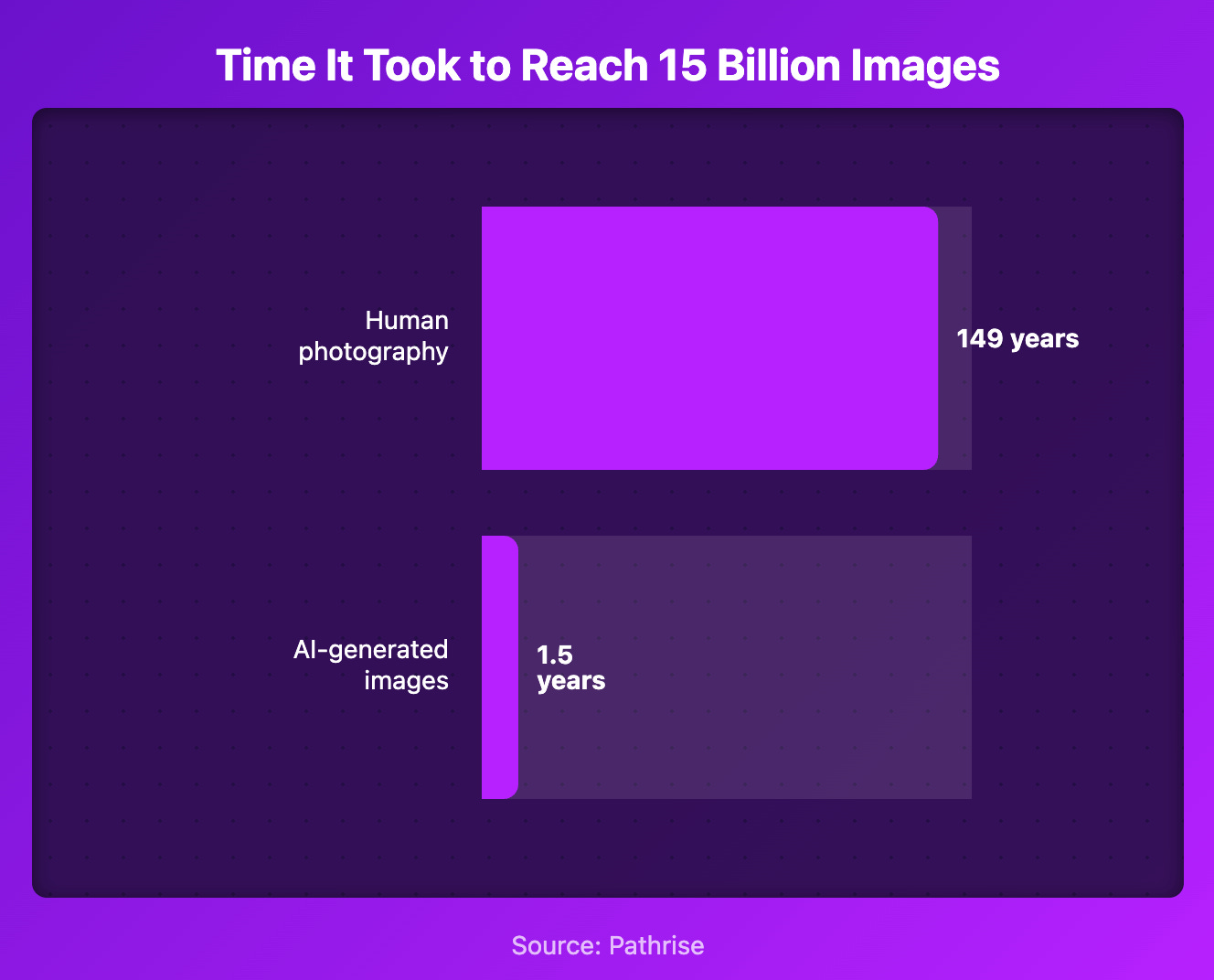
This means that the floodgates have been opened and we will see an even greater proliferation of digital content that will make it even harder to stand out with consumers and make sure your specific piece gets seen and that people engage with it. Distribution and marketing are now the new competitive edges and this includes the marketability of the content and the ads people and companies produce. What are things that are going to resonate with us as consumers more than other images, videos, or TV shows? The things that feel like they were made for us.
To create that feeling, AI has to go beyond the surface level of understanding us so it can connect with us on that human level.
Zooming out
When we zoom out and observe the patterns of how consumers are adopting AI solutions, specifically AI Chats and AI Assistant, the need for empathetic AI becomes all the more obvious.
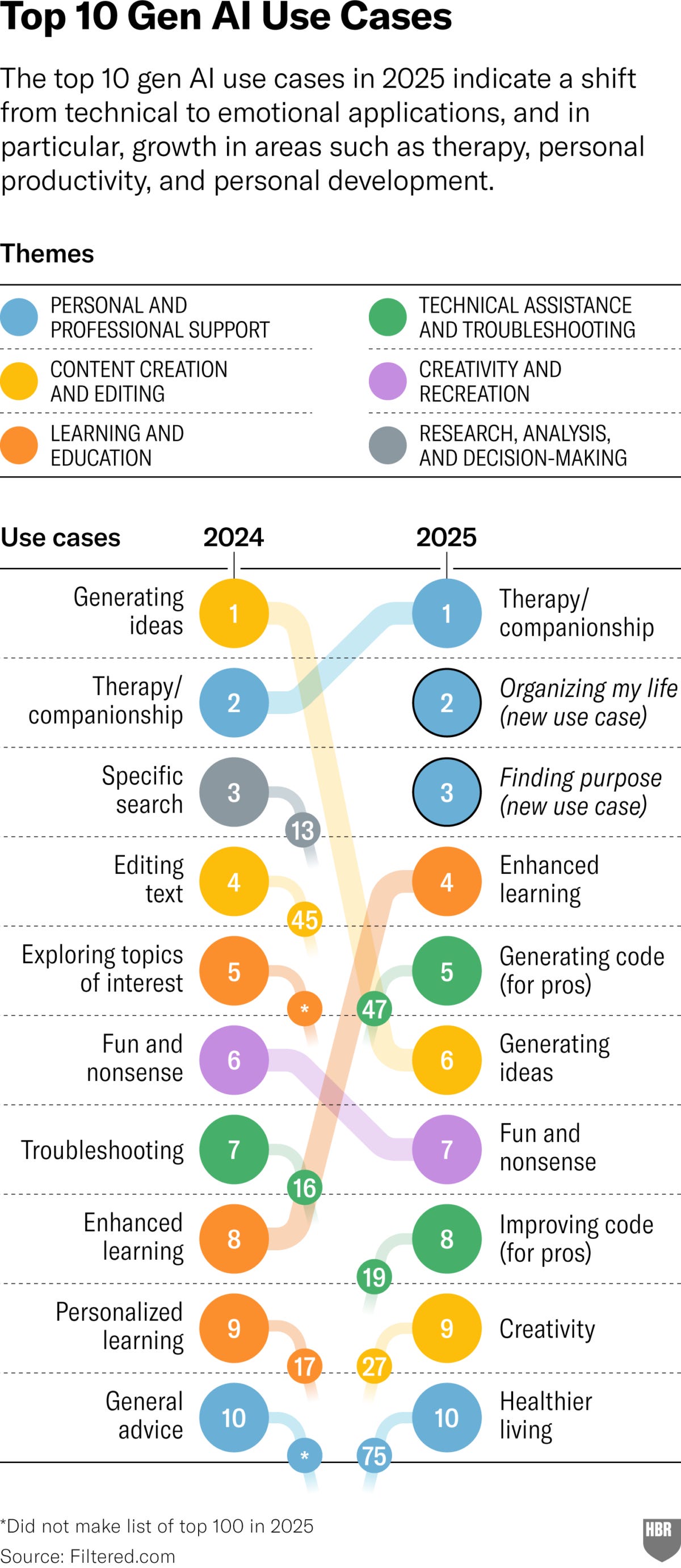
When people are turning to ChatGPT for therapy and companionship, to organize their life, and to find purpose and meaning in life, the AI at work needs empath and a true understanding of who we are so it can truly function as the therapists, doctor, or best friend and give us not what we want - but what we need.
McKinsey came out with a report highlighting how powerful immersive experiences, especially video games, are in capturing and keeping the attention of consumers. We’ll take a look at the report and what it means for brands and companies in our next post - be sure to subscribe and share the love with your network.